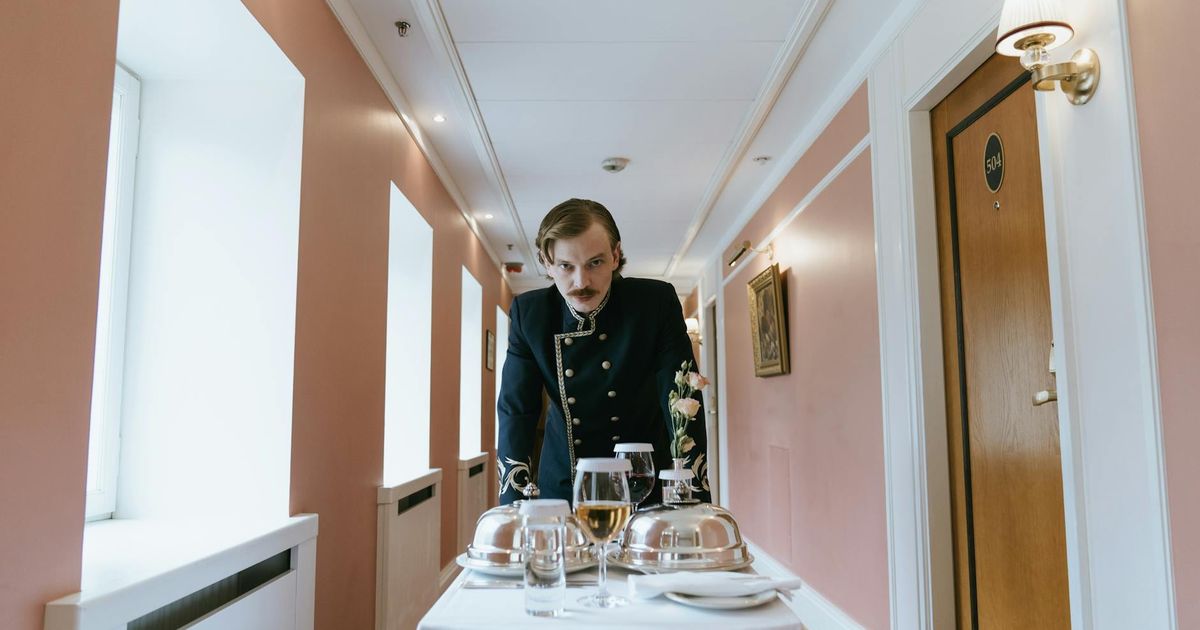

M. Gustave stands in a prison cell that smells, improbably, of L’Air de Panache. The walls are stone. The light is the color of old teeth. Around him, hardened men sleep on narrow bunks or play cards with the dull patience of people who have stopped expecting anything. And Gustave - pink cravat somehow still crisp, posture somehow still architectural - is adjusting a small painting on the wall. Not straightening it for any audience. Not performing composure for anyone watching. The painting is crooked, and he has a level eye for such things, and so he corrects it. That is the whole of it.
The gesture lasts perhaps two seconds on screen. It is easy to miss. But it contains the entire argument of the film in miniature, the way a single pastry can contain an entire philosophy of living. The chaos has not won simply because it has arrived. The soldiers may be at the gates, the hotel may be changing hands, the century may be eating everything alive - and still, someone is making sure the painting hangs straight. Still, someone is insisting that how a room feels matters. That the arrangement of small things is not a trivial concern but a form of defiance so quiet it barely raises its voice.
This is not optimism. It is something older and less naive than optimism. It is the decision, made fresh every morning, to keep giving a damn.
We recognize this impulse in ourselves, though we rarely call it by any grand name. It arrives in the act of folding laundry at midnight, when worry has made sleep impossible. In the way someone facing an uncertain diagnosis tends their garden with unusual care, staking the tomatoes, clearing the weeds, as though to say: I am still the kind of person who does this. The maintenance of small things is often how we hold onto ourselves when larger forces press from every direction.
Elegance, in this sense, is not about surfaces. It is about refusing to let the difficulty of a moment determine the quality of your attention to it.Gustave will be killed on a train before the film ends. The world he loved is already mostly gone by the time we meet him. He knows this, or senses it, the way a person standing in a beautiful old room sometimes senses the cold beneath the warmth. And still he sprays the perfume. Still he quotes the poetry. Still he straightens the painting in the cell.
Not because it will last. But because it is his, for now, and that turns out to be reason enough.