

Picture this: You’re traveling abroad, trying to navigate a bustling market where nobody speaks your language. Instead of fumbling with a spotty internet connection to access a translation app, your phone instantly converts the vendor’s words into your native tongue. No cloud required, no data leaving your device. This scenario isn’t science fiction. It’s the reality that major tech companies are racing to deliver.
Your smartphone is about to get dramatically smarter without ever sending your personal data to distant servers. Apple, Google, Qualcomm, and MediaTek are locked in an intense competition to embed powerful AI directly into the chips that power your devices. This represents the most significant shift in computing architecture since smartphones went mainstream. And it’s happening right now in your pocket.
The Shift to On-Device Processing
For years, AI meant sending your data to massive cloud servers, waiting for processing, and hoping your internet connection held steady.
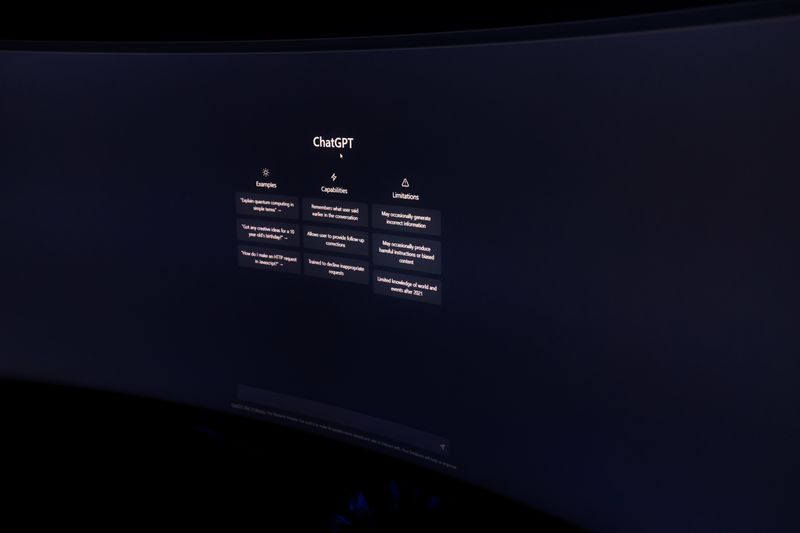
That model is rapidly becoming obsolete.
Today’s flagship devices feature dedicated neural processing units (NPUs) that handle AI tasks locally. Apple’s Neural Engine delivers 35-40 trillion operations per second (TOPS), while Qualcomm’s Hexagon processor pushes 45 TOPS [F22labs]. MediaTek’s Dimensity chips have crossed the 50 TOPS threshold [F22labs]. These processors can analyze a photo, recognize faces, and enhance image quality in milliseconds. Tasks that once required round-trips to data centers.
Speed improvements tell only part of the story. Privacy concerns are fundamentally reshaping consumer expectations. When your voice assistant processes commands locally, that conversation never travels across the internet where it could be intercepted, stored, or analyzed by third parties. Your health data from wearables, your financial queries, your personal photos all can now be processed without ever leaving your possession.
There’s also a practical dimension that often gets overlooked: offline functionality. In emerging markets where connectivity remains expensive and unreliable, on-device AI transforms what’s possible. A farmer in rural India can use AI-powered crop analysis without cellular coverage. A student in remote Alaska can access intelligent tutoring without broadband. The technology works anywhere, anytime.
Market Impact and Investment Trends
The race to dominate on-device AI is reshaping the entire semiconductor industry.
 Photo by
 NVIDIA currently leads the broader edge AI chip market with 29.4% share, followed by Intel at 18.7% and Qualcomm at 12.9% [Openpr]. But these numbers are shifting rapidly as mobile-focused chipmakers pour resources into neural processing capabilities.
Qualcomm’s Snapdragon 8 Gen 3 has claimed top scores on industry benchmarks like MLPerf and AnTuTu [Qualcomm], signaling the company’s aggressive push to define the performance standard. Meanwhile, Apple continues integrating AI capabilities deeper into its custom silicon, and Google’s Tensor chips prioritize AI workloads over raw processing speed.
Smartphone manufacturers have noticed. Samsung’s Galaxy S24 marketing barely mentions camera megapixels. Instead, it highlights AI-powered features like live translation and intelligent photo editing. Google’s Pixel 8 campaigns center entirely on AI capabilities that work without cloud connectivity. The traditional upgrade cycle driven by better cameras and faster processors is giving way to AI-first differentiation.
The implications extend far beyond phones. Automotive systems are adopting local AI for real-time driver assistance without relying on cellular networks. Smart home devices process voice commands locally for faster response times. Industrial IoT sensors analyze data at the edge, reducing bandwidth costs and enabling split-second decisions. Analysts project edge AI device shipments will exceed 1.5 billion units annually by 2026.
What This Means for Users
Strip away the technical specifications, and on-device AI delivers something remarkably simple: technology that responds instantly and respects your privacy.
 Photo by
 Consider real-time translation. Current on-device systems can translate conversations as they happen, with no perceptible delay and no internet requirement. You speak, the translation appears. Whether you’re in a subway tunnel or a remote mountain village. Photo editing follows similar patterns: advanced adjustments that once required desktop software now happen in seconds, entirely within your phone’s processor.
The efficiency gains are equally significant. Edge NPUs are 2.6 times more power-efficient than cloud GPUs for comparable tasks [F22labs]. This translates directly to battery life. Your device isn’t constantly transmitting data to distant servers and waiting for responses. The processing happens locally, quickly, and with minimal power draw.
Perhaps most importantly, on-device AI enables genuine personalization without privacy compromise. Your device can learn your habits, preferences, and patterns without that information ever being uploaded to company servers. Medical wearables analyze health trends locally, meeting strict healthcare privacy regulations while still providing intelligent insights. Your keyboard learns your typing patterns without sending your messages anywhere.
The technology also democratizes access. Features that once required expensive cloud subscriptions or premium service tiers become standard device capabilities. The AI lives in the hardware you already own.
The Road Ahead
On-device AI isn’t without challenges.
 Photo by
 Running sophisticated models locally requires significant chip real estate and engineering expertise. Smaller companies may struggle to compete with the R&D budgets of Apple, Google, and Qualcomm. There’s also the question of model updates. Cloud AI can improve continuously, while on-device models require software updates or new hardware.
Yet the trajectory seems clear. Each generation of mobile processors dedicates more transistors to neural processing. Each flagship phone announcement emphasizes AI capabilities over traditional specifications. Each privacy scandal reinforces consumer demand for local data processing.
The competitive dynamics are fascinating. Companies that once competed primarily on camera quality and display resolution now battle over AI benchmark scores and neural engine efficiency. The chip that powers your next phone may matter more for its AI capabilities than its raw processing speed.
The shift to on-device AI represents more than a technical upgrade. It’s a fundamental reimagining of how intelligent technology can work. Faster responses, genuine privacy protection, offline functionality, and improved battery life aren’t competing priorities. They’re all enabled by the same architectural shift toward local processing.
When considering your next device purchase, the presence of dedicated AI processing hardware may prove more valuable than traditional specifications. The question isn’t whether on-device AI will become standard. It’s how quickly the entire industry will complete this transformation.


