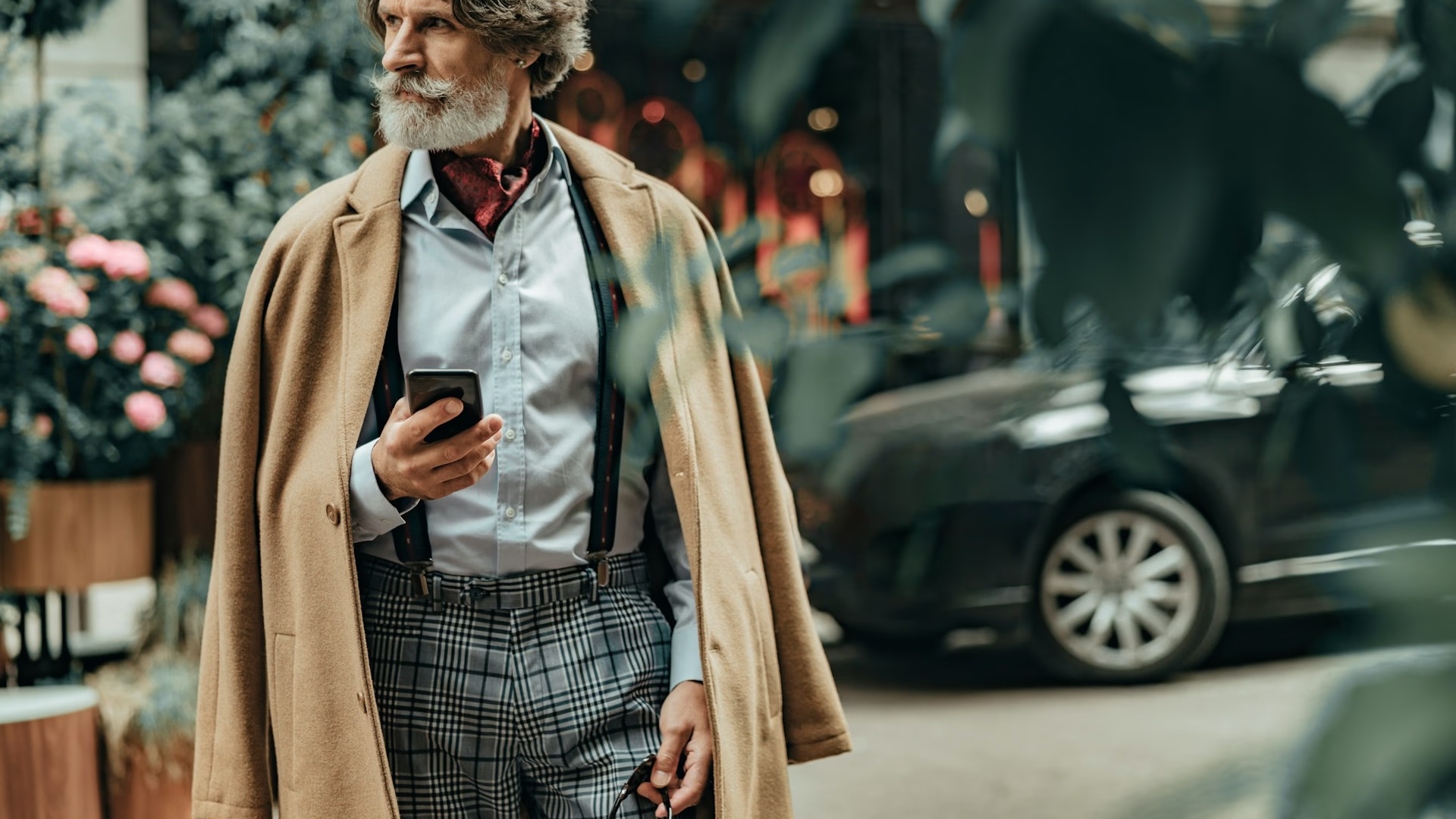
66% of consumers now rank value for money as their top fashion priority, while trendiness lands at just 10% [Informa]. That gap isn’t subtle. It’s a chasm. Published in February 2026, the Informa 2026 US Fashion Consumer Outlook Report surveyed over 1,032 US consumers and captured a market bracing for tariff-driven price hikes. A striking 92% plan to adjust their shopping habits in response [Informa]. This isn’t a theoretical shift. It’s already reshaping how people build their wardrobes, how brands position themselves, and what “good fashion spending” actually means right now.
The Value Shift Explained
Value-first shopping has crossed every income bracket and demographic line.
 Photo by
 The Informa data makes clear this isn’t just budget-conscious consumers tightening belts. It’s a mainstream philosophy changing what “smart” looks like at the register [Informa].
A few converging forces are driving it:
-
Cost-per-wear thinking: Shoppers increasingly weigh how many times they’ll actually reach for a piece, favoring a durable jacket with staying power over a cheap trend-driven buy worn twice.
-
Tariff anxiety: With 92% of consumers expecting to change habits due to anticipated price increases , every purchase feels weightier.
-
Redefined worth: Value now means durability, quality, and brand desirability. Discounts alone no longer seal the deal .
The result is a consumer who still wants to look great but refuses to sacrifice longevity for novelty. That’s not a budget trend. It’s a cultural reset in how people relate to their closets.
Intentional Spending Replaces Impulse
The Informa report captures a telling mood shift: consumers are approaching fashion spending with intentionality, not impulse.
 Photo by
 They’re willing to spend, but they want high-quality, durable, or classic staple products at competitive prices .
Consideration windows are growing longer. Shoppers research textures, read reviews on construction quality, and audit what’s already in their wardrobes before adding anything new. Social media still sparks discovery, but the path from “I love that” to “I bought that” has gotten significantly longer.
Fashion now ranks fourth among discretionary spending categories across all age groups 18 to 55+, behind dining out, travel, and fitness . People aren’t abandoning style. They’re just more selective about where fashion sits in their broader spending priorities. That selectivity rewards curated, effortless pieces that earn their place over time.
Durability as the New Desirability
When 64% of consumers cite size and fit as their top concern , it signals something deeper than vanity metrics.
 Photo by
 Shoppers want clothes that work: pieces that drape correctly, hold their proportion through washes, and feel as good on the fiftieth wear as the first.
Classic wardrobe staples such as well-fitted trousers, quality knitwear, and reliable outerwear are outperforming novelty-driven items. Resale value has quietly entered the purchase equation too, with shoppers factoring in whether a piece holds worth on the secondhand market before buying new.
“Today’s consumers are approaching fashion spending with intentionality, not impulse. They’re willing to spend, but they’re looking for high-quality, durable, or classic, staple products at competitive prices.”
This is durability as personal style strategy, not deprivation. Fewer pieces, better quality, longer life.
How Brands Are Responding
The Informa report is direct about what’s required: success will demand a strategic pivot toward focused consumer engagement, purpose-driven storytelling, and superior offerings .
 Photo by
 Brands leading with material transparency and quality-forward positioning are gaining ground. Repair programs, extended care guides, and take-back schemes are shifting from corporate responsibility gestures to genuine competitive differentiators. Volume-driven fast-fashion labels, by contrast, face harder questions about relevance in a market where shoppers demand more from every dollar.
For independent designers and heritage labels with craft-forward reputations, this moment is an invitation. Consumers are actively seeking the kind of curated, intentional product that smaller brands have always offered. They just weren’t the majority before. Now they are.
The numbers tell a clear story: value, durability, and intention now anchor how most consumers approach fashion. Whether your budget runs toward investment pieces or thrifted finds, the underlying shift is the same. Building a wardrobe with staying power beats chasing seasonal novelty. Choosing pieces you’ll still love wearing years from now isn’t a limitation on personal style. It’s the foundation of it.