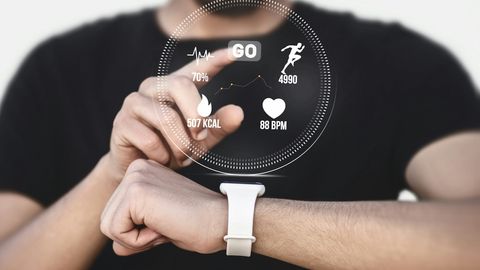
Athletes drowning in performance data are losing the intuition that made them great. Studies show checking metrics mid-competition slows decision-making, while data-free training sessions improve adaptive play when it matters most.
When Numbers Replace Gut Feeling
Athletes today face an endless stream of performance data. Wearables track heart rate, speed, and biomechanics during every training session. Apps analyze sleep quality, recovery scores, and nutritional intake. The information never stops flowing.
The problem? All this monitoring creates noise that drowns out something valuable: the athlete’s natural instincts. Studies show that athletes who check metrics mid-competition make significantly slower decisions than those relying on feel alone.
This constant data stream disrupts what psychologists call “flow state.” That’s the zone where intuition, creativity, and excellence converge. When athletes start questioning natural movements and strategies, they replace years of muscle memory with analytical overthinking during the moments that matter most. Professional coaches increasingly report hesitation in athletes who obsessively review post-game analytics.
Rediscovering Athletic Instinct
Forward-thinking programs are fighting back with a simple approach: data-free training sessions. These practices force athletes to make decisions based solely on reading opponents and trusting their preparation. No screens, no stats, no second-guessing.
Teams incorporating these instinct-focused sessions report measurable improvements in adaptive play during unpredictable game situations. Athletes learn to trust physical sensations and pattern recognition over conscious analysis.
The key insight? Your workout data should inform decisions, not dictate them. If the numbers say you should be able to perform at a certain level but your body feels terrible, trust your body. Data is a tool, not a tyrant. Some Olympic teams now restrict athlete access to performance metrics 48 hours before major events. The goal is simple: prepare with data, compete with instinct.