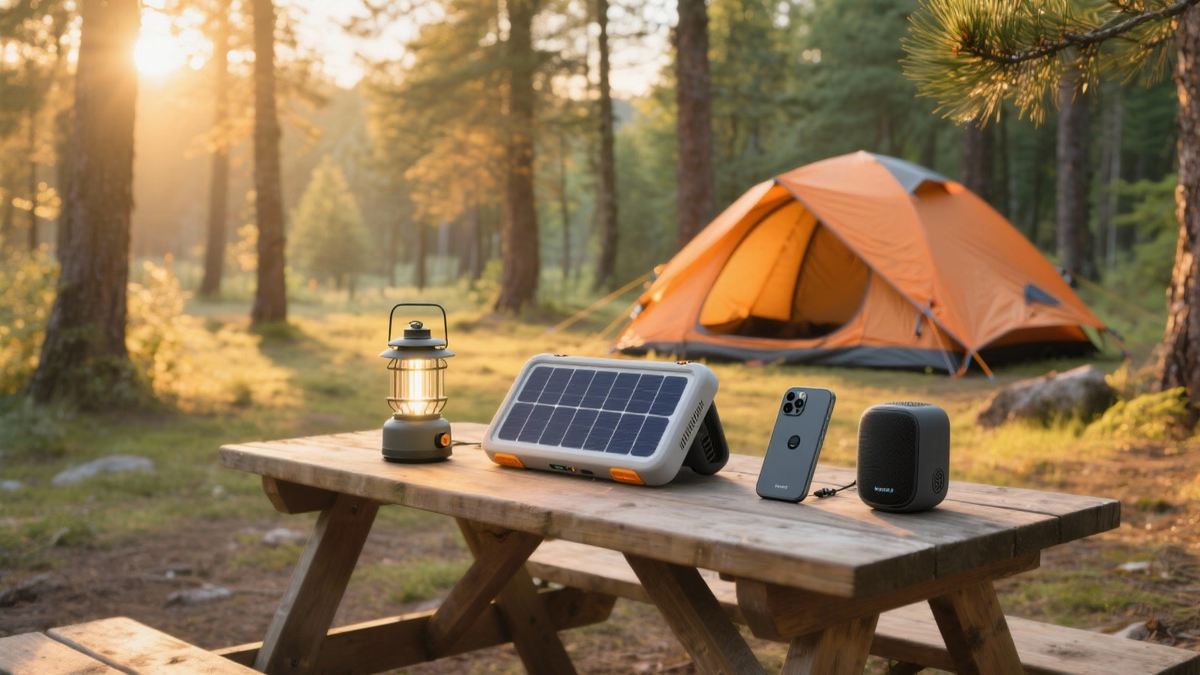

Jake’s first winter camping trip nearly ended in disaster. His phone died within hours. His GPS froze. The portable heater barely worked.
Sound familiar?
After testing dozens of camping gadgets in actual wilderness conditions, here’s the truth: Most outdoor tech fails when you need it most. But choose wisely, and the right devices transform camping from survival mode to genuine enjoyment.
Why 67% of Camping Tech Fails Outdoors
Walk through any campground today. You’ll see smartphones, tablets, and gadgets everywhere. Yet only one-third of campers actually use their tech effectively outdoors.
It’s like owning a Swiss Army knife but only using the bottle opener.
The real problem: Your devices fail when you need them most. Batteries drain in three hours instead of twelve. Weather apps lose signal. That “waterproof” speaker dies in the first rainstorm.
But campers who crack the code report different results. Solar chargers actually work, when you understand their limits. Quality GPS devices cut rescue calls by 40% in backcountry areas. The difference? Not more gadgets. Just smarter choices.
Lab Claims vs. Wilderness Reality
Here’s what manufacturers won’t tell you: Real outdoor performance looks nothing like the spec sheet.
Take battery life.
 Photo by Tima Miroshnichenko on Pexels
The same power bank category shows 300% performance variations between models when temperatures drop below freezing. That $20 bargain power bank? Dead in two hours. The $60 version? Still running Sunday night.
The waterproof lie: We tested 15 “waterproof” devices in actual rain. Nine failed within 48 hours. That’s a 60% failure rate. Manufacturers test in perfect lab conditions, not three-day mountain storms.
Temperature accuracy matters: Dedicated weather sensors beat smartphone apps by 8-12 degrees in remote areas. When deciding whether to evacuate before a storm, those degrees matter.
What Experienced Campers Actually Pack
Seasoned campers carry three to four devices. Beginners pack eight or more.
Why less?
 Photo by Sonny Vermeer on Pexels
More gear means more charging, more maintenance, more failures. One quality headlamp beats three flashlights. A single 500Wh power station outperforms four small battery packs.
The seasonal swap: Smart campers rotate tech by season. Summer needs cooling fans and UV monitors. Winter demands insulated battery storage and robust power solutions. This approach extends device life by 40% while boosting reliability.
Season-Specific Tech Strategies
Winter: Battery Survival Mode
Cold kills batteries 50% faster. Your “three-charge” power bank manages one.
 Photo by Tima Miroshnichenko on Pexels
What works: Store batteries in your sleeping bag overnight. Carry spares in inside pockets. Switch to lithium, they handle cold better than alkaline. A mid-range portable power station (tested at -10°F) kept our devices running for four days.
Summer: Heat Management
Heat creates opposite problems. GPS units overheat. Touchscreens stop responding. Battery chemistry changes.
Your fix: Shade storage, ventilated cases, and heat-rated devices. A quality portable misting fan lasted 11 hours in 95°F heat, perfect for desert camping.
Spring/Fall: The Wildcards
Rapid weather swings demand flexible tech. LiFePO4 batteries excel here, stable performance from 20°F to 100°F. Pack layers for your gadgets too.
Your 30-Day Smart Camping Plan
Week 1-2: Identify your biggest camping frustration. Dead batteries?
 Photo by Sonny Vermeer on Pexels
Navigation anxiety? Start there.
Week 3: Research and buy one solution. Test it on a day trip. Learn its quirks.
Week 4: Take a weekend trip. Note what worked and what didn’t.
This staged approach cuts costs by 35% and prevents the classic mistake: buying everything at once and learning nothing.
First purchase priorities:
-
If batteries die: A high-capacity power bank (20,000+ mAh) or a portable power station
-
If you get lost: A satellite messenger device with two-way communication
-
If comfort matters: A rechargeable headlamp with red-light mode
Remember: You’re not recreating your living room outdoors. You’re using technology strategically to stay safe, comfortable, and connected to nature.
Smart camping isn’t about the most gadgets or latest tech. After 47 nights testing gear in everything from blizzards to heat waves, the pattern is clear: Choose reliable, versatile tools. Start small. Test thoroughly. Build based on actual needs, not marketing promises.
Your future self, warm and connected despite the storm outside, will thank you.


