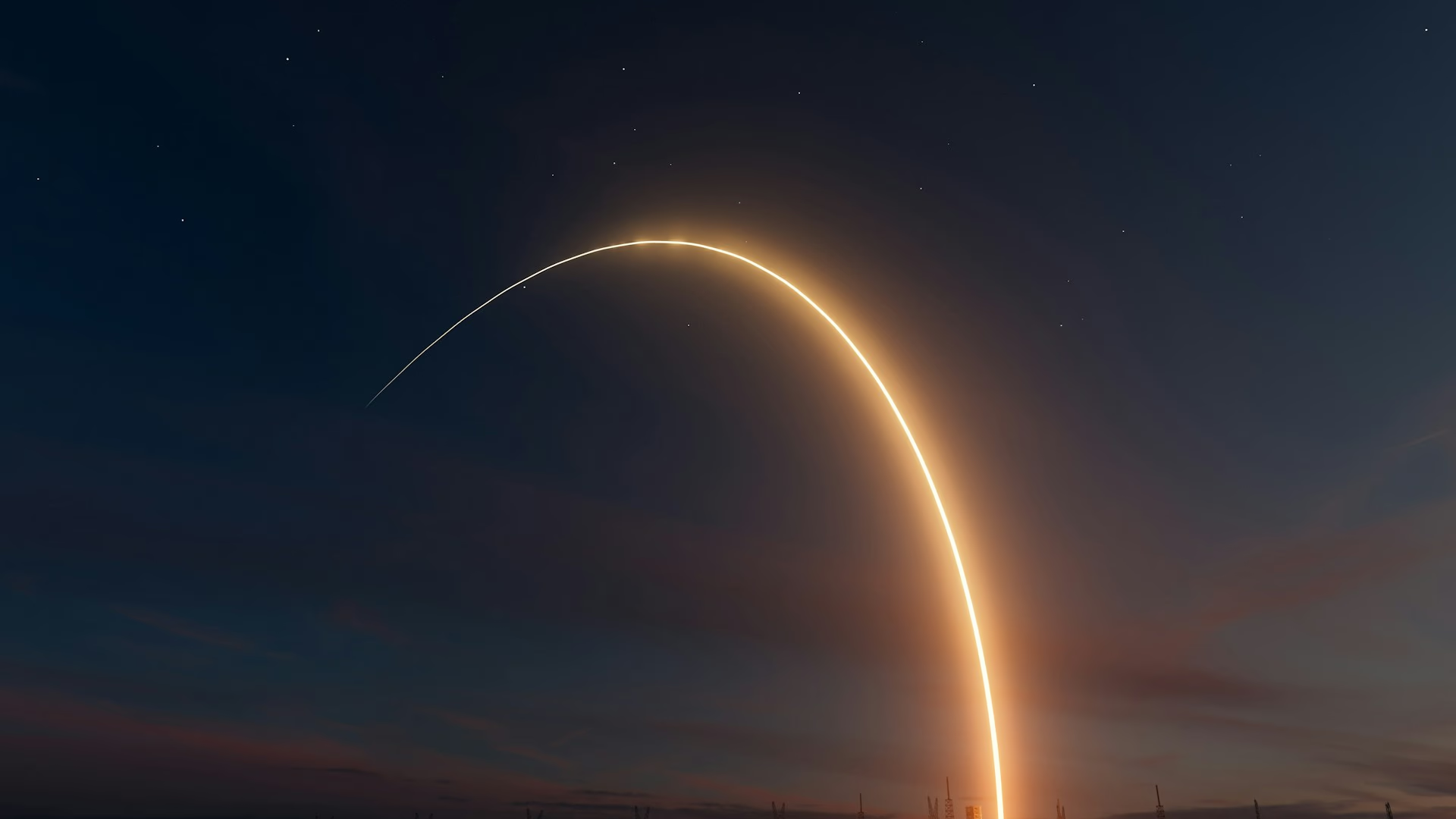
“I think fundamentally the future is vastly more exciting and interesting if we’re a spacefaring civilization and a multiplanet species than if we’re not. You want to be inspired by things. You want to wake up in the morning and think the future is going to be great. And that’s what being a spacefaring civilization is all about.”
— Elon Musk, SpaceX talk on Making Humans a Multiplanetary Species (2017)
Elon Musk is not a figure who speaks in modest terms. As the founder of SpaceX and CEO of Tesla, he has built his career around ideas that most people once dismissed as fantasy: reusable rockets, electric vehicles at scale, and now, the colonization of Mars. When he speaks about space, he is not speculating from the sidelines. He is the person actively building the ships.
This quote comes from a 2017 SpaceX presentation where Musk laid out his vision for making humanity a multiplanetary species. The talk was technical in many parts, covering rocket architecture and fuel systems, but this passage stepped back from the engineering to ask something more personal: why does any of this matter?
His answer is refreshingly human. He does not lead with survival statistics or extinction risk calculations. He leads with inspiration, with the simple desire to wake up and feel that the future is worth looking forward to. For Musk, space is not just a backup plan for civilization. It is a source of collective meaning.
Whether one agrees with his methods or his priorities, the sentiment here is hard to dismiss. The idea that humanity needs something vast to reach toward, something that pulls us forward rather than just keeps us safe, touches on a deeper truth about how people and cultures stay alive in spirit, not just in body.