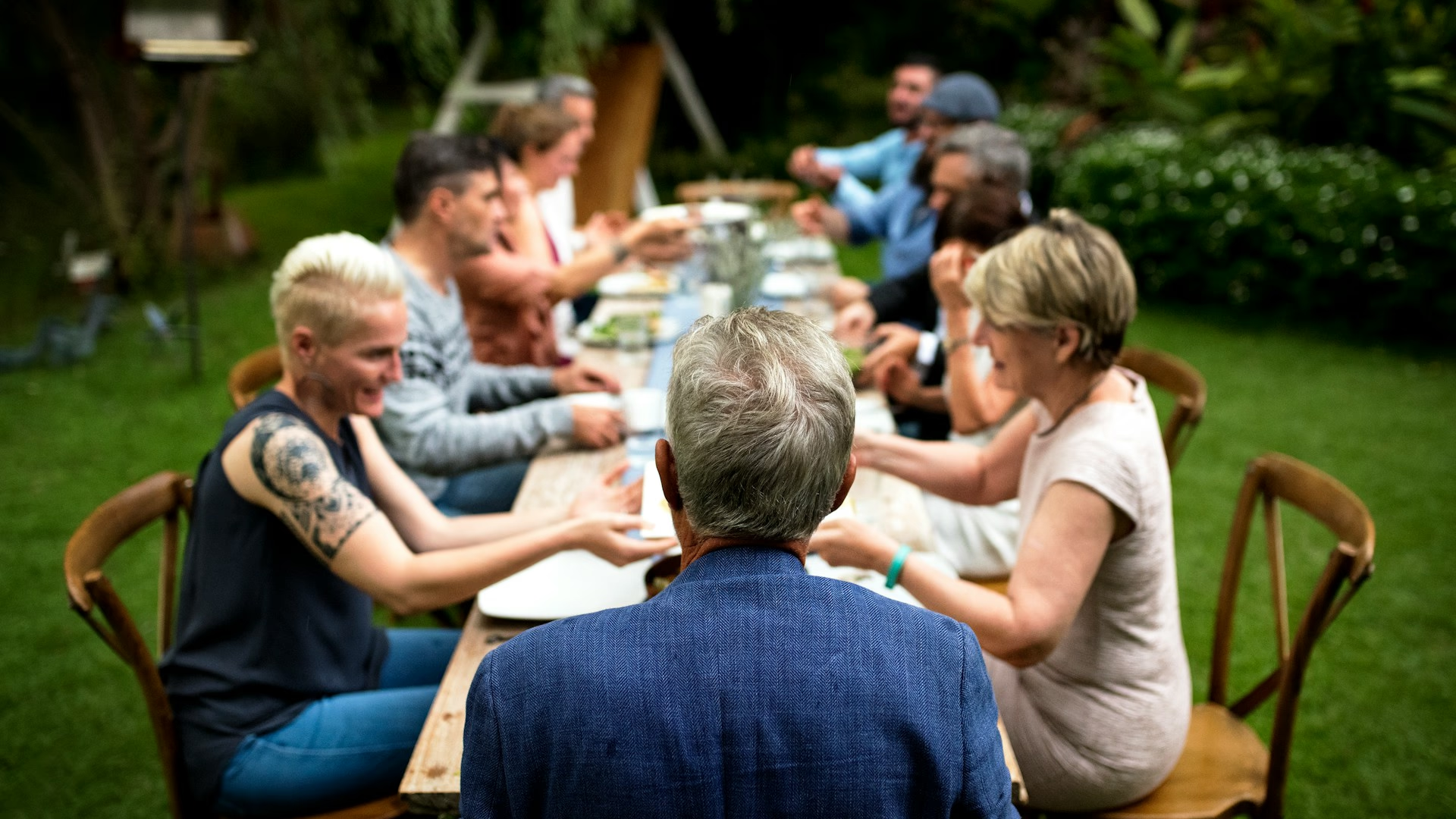
Forget bingo nights and bland cafeterias. The generation that packed aerobics studios in the 1980s is now demanding rooftop gardens, chef-driven dining, and co-working spaces in their retirement communities. Senior housing occupancy reached 89.4% as of Q4 2025, up 11 percentage points from the 2021 pandemic low [Clarion]. That surge isn’t just about demographics. It reflects a fundamental shift in what aging looks like when Baby Boomers set the terms. With 86% of investors planning to expand their seniors housing portfolios in 2026 [JLL], the money is following a generation that refuses to slow down.
Not Your Grandparents Retirement
The old retirement playbook, built around quiet days, passive care, and maybe a shuffleboard court, is effectively dead.
 Photo by
 Boomers are entering this chapter with more wealth, better health, and a fierce sense of identity. The median net worth for adults aged 65 to 74 hit $410,000 as of 2022, a figure 2.3 times higher than the inflation-adjusted 1989 level [Clarion]. That financial cushion buys options, and Boomers are using it intentionally.
This is the generation that fueled the fitness boom, launched second careers in their 50s, and adopted smartphones at rates that surprised everyone. Traditional senior communities built around medical oversight and limited programming simply don’t match their identity. Meanwhile, the percentage of adults aged 75 and older living with relatives fell to 26% in 2023, down from 42% in the 1970s [Clarion]. Boomers aren’t moving in with family. They’re curating their own living environments.
What didn’t work for many: isolated suburban retirement parks with little walkability and fewer social anchors. What does work: active adult communities that treat residents like participants, not patients.
Wellness as the New Baseline
For Boomers, wellness isn’t a perk listed in a glossy brochure.
 Photo by
 It’s the entire framework. Physical fitness, mental stimulation, and nutritional quality have moved from nice-to-have amenities to non-negotiable expectations. Communities that invest in robust wellness programming consistently report higher resident satisfaction and longer average stays.
The shift goes well beyond a gym and a pool. Boomers are seeking out:
-
Holistic health programming that includes mindfulness, yoga, and sleep wellness
-
Lifelong learning opportunities like lecture series, book clubs, and art studios
-
Farm-to-table dining with transparent sourcing and chef-curated menus
-
On-site preventive health screenings and fitness coaching
Brands like Life Time and SilverSneakers have tested the waters with programming tailored to older adults, and the demand signal is unmistakable. Generic “wellness weeks” with a single seminar and a smoothie bar fall flat. What resonates is a daily-integrated approach: movement built into the architecture, nutrition woven into every meal, mental engagement scheduled as routinely as medication management once was.
Connection Fills the Loneliness Gap
The U.S. Surgeon General’s 2023 advisory identified loneliness as a public health epidemic, with older adults disproportionately affected.
 Photo by
 Boomers, acutely aware of this risk, are choosing community with intention rather than waiting for isolation to set in.
Shared interest clubs, volunteer programs, and intergenerational events are replacing passive common rooms as the social heartbeat of modern communities. The difference is intentional social design: spaces and schedules engineered to create organic encounters, not forced mixers.
Digital tools play a role too. Boomers are using video calls, online learning cohorts, and social platforms to maintain rich networks beyond their physical neighborhood. Communities that rely solely on in-person programming or solely on tech-based solutions both miss the mark. The balanced approach, real-world connection supported by technology, is what actually works.
Senior living occupancy is nearing 90% and is on track to surpass the 90.2% record from 2014 by year-end [McKnight’s]. That trajectory suggests residents are staying longer and choosing these communities earlier, a sign that the connection piece is landing.
Communities Redesign From the Ground Up
Developers are responding with bold reinventions.
 Photo by
 New senior communities feature co-working spaces, rooftop terraces, and walkable mixed-use neighborhoods designed to mirror vibrant urban living. Location strategy has shifted too, with communities deliberately placing themselves near universities, cultural centers, and downtown corridors.
University-based retirement communities, where residents can audit college courses, have seen growing waitlists. The appeal is clear: intellectual stimulation, intergenerational contact, and a built-in sense of purpose.
Operators are also hiring roles that didn’t exist a decade ago:
-
Wellness directors overseeing holistic health programming
-
Social coordinators designing community engagement calendars
-
Culinary teams with restaurant-industry credentials
-
Experience directors focused on resident satisfaction metrics
New construction has slowed: senior housing starts in 2025 dropped to 10,100 units, down 18% from 2024 . That supply constraint, paired with surging demand, means communities that do get built carry enormous pressure to get it right. Those that treat this as a routine real estate play, without embedding wellness and connection into their core, risk irrelevance before they even open their doors.
Boomers are dismantling the passive retirement model and replacing it with something built on wellness, deep social connection, and purposeful living. The communities rising to meet them aren’t just renovating. They’re rethinking what aging infrastructure looks like entirely. With demand climbing and supply constrained, this cultural shift has no reverse gear. If you’re planning your own next chapter or supporting a loved one, it’s worth exploring active adult communities that prioritize intentional design and daily engagement. The standard for senior living has permanently changed.