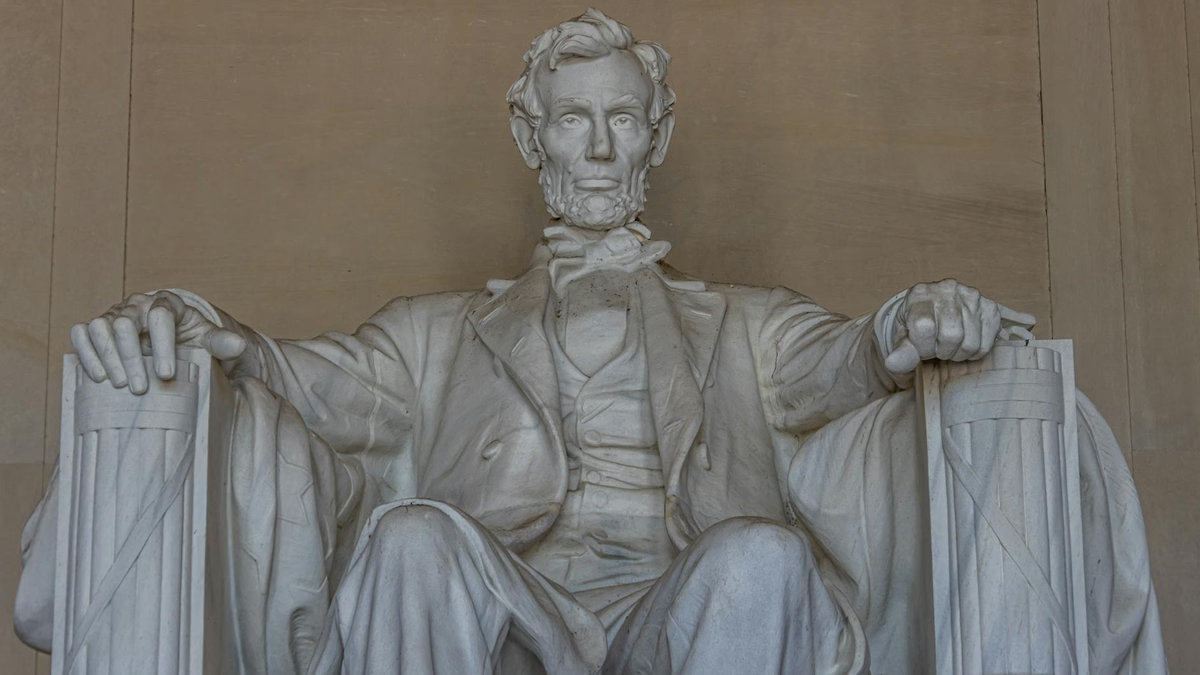

“Four score and seven years ago our fathers brought forth on this continent, a new nation, conceived in Liberty, and dedicated to the proposition that all men are created equal.”
— Abraham Lincoln, Gettysburg Address (1863)
Abraham Lincoln was the 16th President of the United States, a man who guided the country through its most violent and uncertain chapter. When he spoke these words in November 1863, the Civil War was still raging. He stood on a battlefield in Pennsylvania where, just months earlier, over fifty thousand soldiers had been killed, wounded, or gone missing in three days of fighting. The occasion was the dedication of a military cemetery, and most eyes that day were on the featured speaker, Edward Everett, who delivered a two-hour oration. Lincoln spoke for roughly two minutes.
What he chose to say in those two minutes was not a report on the war’s progress or a call for vengeance. He reached back eighty-seven years to the founding of the country, reminding his audience, and history, that the nation was not built on geography or conquest but on an idea. Liberty. Equality. A proposition, as he called it, still being tested.
Lincoln had spent his presidency fighting to hold that idea together, and he would sign the Emancipation Proclamation earlier that same year. He knew the cost of the words he was invoking. The brevity of this opening line carries the full weight of that knowledge.