At 42, Sarah thought she was doing everything right. She ate salads, walked her dog daily, and never missed her annual checkup. When her doctor said her bloodwork looked “fine,” she felt relieved. But something nagged at her: the afternoon energy crashes, the restless nights, the extra pounds that wouldn’t budge.
Six months later, after tracking her blood sugar with a continuous glucose monitor, Sarah discovered she was pre-diabetic. Her annual labs had missed what daily data revealed: her glucose spiked dramatically after her morning oatmeal and fruit smoothie. Catching this pattern early gave her the power to reverse course. No medication required.
The secret to longevity isn’t luck or perfect genetics. It’s understanding your personal health data and acting on patterns before problems emerge. Let’s explore why traditional monitoring often misses warning signs, which metrics actually predict long-term health, and how you can build your own personalized longevity plan.
The Wake Up Call
Here’s a truth that may surprise you: more than 80% of heart disease, stroke, and type 2 diabetes could be prevented through healthier behaviors.

The challenge? Most chronic diseases develop gradually over 10 to 20 years before diagnosis. By the time symptoms appear, you’re often playing catch-up.
Annual checkups provide valuable snapshots, but snapshots miss the movie. Your body sends signals constantly. Subtle shifts in resting heart rate, sleep disruptions, energy dips hint at emerging issues long before they show up on standard lab work.
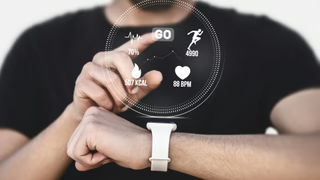
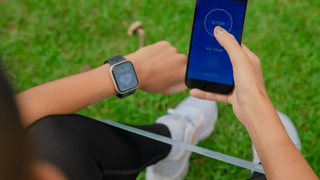
This is where daily tracking changes everything. Modern wearable sensors now offer clinical-grade accuracy comparable to traditional hospital equipment. That means the watch on your wrist or the ring on your finger can catch patterns appearing 6 to 18 months before clinical symptoms emerge.
Your body is always communicating. The question is whether you’re listening.
Your Personal Health Dashboard
You don’t need to track everything.
 Photo by
 Five core metrics form the foundation of longevity tracking: sleep quality, movement, nutrition, stress markers, and recovery.
Sleep consistency matters more than you think. Research shows that 7 to 8 hours at regular times significantly reduces health risks. Irregular sleep patterns can age your cells faster than many other lifestyle factors. Tools like the Oura ring track sleep accurately within about 30 minutes, giving you reliable data without visiting a sleep lab.
Movement follows a similar pattern. Consistency beats intensity. Getting 150 to 300 minutes of vigorous activity weekly, or 300 to 600 minutes of moderate movement, is associated with a 35% to 42% reduction in all-cause mortality. That translates to roughly 7,000 to 10,000 daily steps plus strength training twice weekly.
The Apple Watch offers clinically acceptable accuracy for heart rate tracking during exercise, making it easier than ever to monitor your progress. Focus on these five metrics, track them consistently, and watch for trends over time.
Patterns That Changed Everything
Real people tracking their data have discovered life-changing patterns hiding in plain sight.
 Photo by
 Take Mark, 55, who noticed his glucose spiked dramatically after his “healthy” morning smoothies. Switching to protein-first meals dropped his A1C by 1.2 points over three months. Continuous glucose monitoring revealed what generic nutrition advice couldn’t: his individual food responses differed dramatically from the average person’s.
Then there’s Lisa, a marketing executive who couldn’t understand why she always felt exhausted despite getting eight hours of sleep. Her heart rate variability data told a different story. Checking work emails before bed sent her stress markers soaring. Setting a simple boundary of no screens after 8 PM added 90 minutes of deep sleep nightly.
These personalized insights beat generic health advice every time. Your data tells your unique story, and understanding that story is the first step toward writing a healthier ending.
Your Longevity Action Plan
Starting can feel overwhelming, but the key is simplicity.
 Photo by
 Begin with one metric, build consistency, then expand.
Weeks 1 through 4: Track sleep using any device or app you already own. Establish your baseline and identify patterns. Do you sleep better on days you exercise? Does alcohol disrupt your rest more than you realized? Research shows 28 days creates reliable baseline data for most metrics.
Months 2 and 3: Add movement and nutrition tracking. Look for connections between metrics. How does poor sleep affect your workout motivation? How do certain foods impact your energy and recovery?
Month 4 and beyond: Review monthly trends, adjust habits based on what your data reveals, and celebrate small wins. Studies show tracked habits stick three times longer than untracked ones.
Remember, global life expectancy has risen from 46 years in 1950 to over 70 years today. Much of that gain came from better information and earlier intervention. Your personal health data continues that revolution at the individual level.
Longevity isn’t about perfect genetics or expensive treatments. It’s about understanding your body’s signals through data and making small, consistent changes that compound over decades.
Pick one metric to track this week. Sleep is a great starting point. Notice what patterns emerge. Your future self will thank you for paying attention today.
The best time to start tracking was ten years ago. The second best time is right now.