
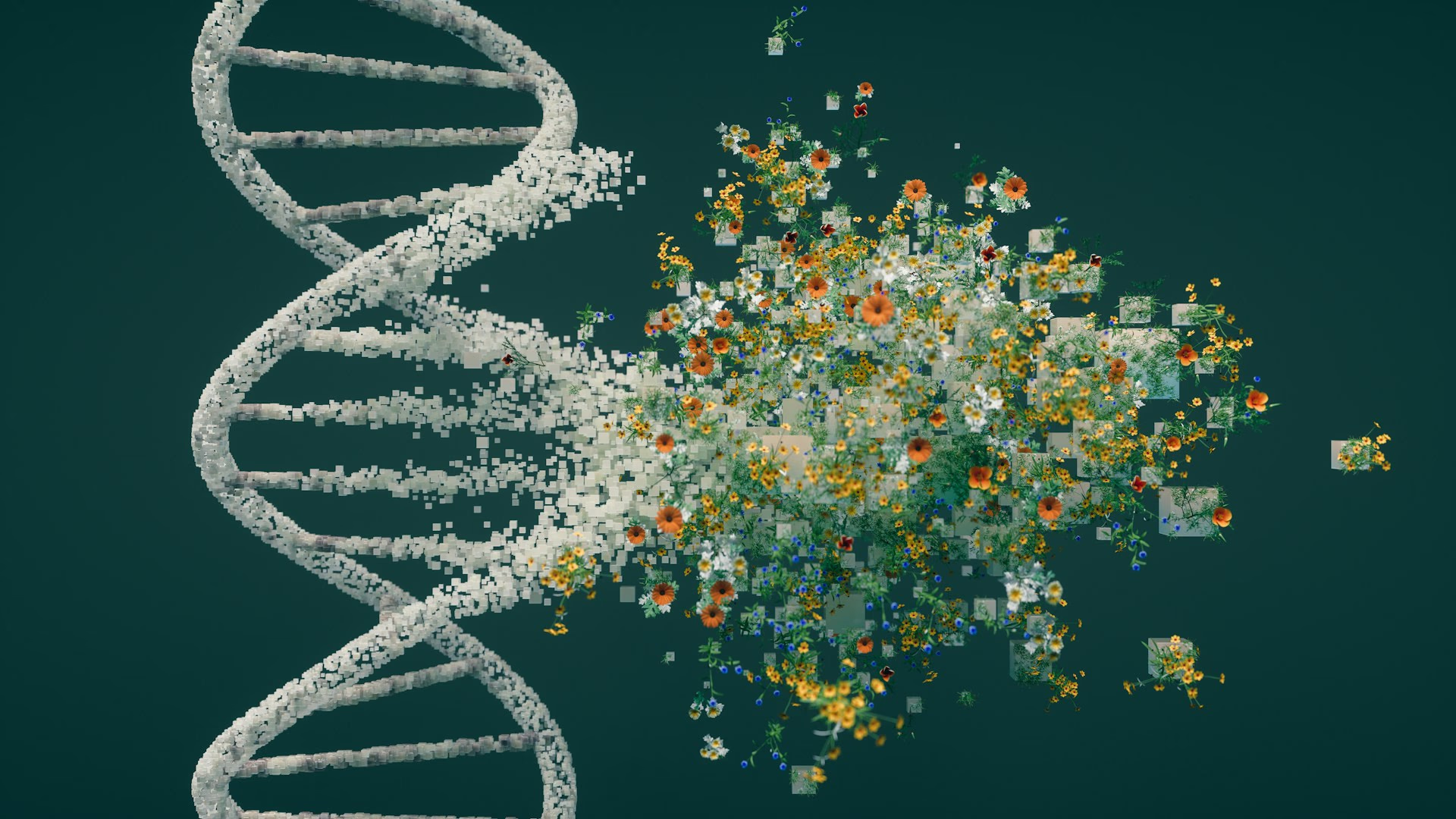
Millions swallow a statin every morning. Roughly half still fail to reach safe LDL cholesterol levels. That gap between treatment and outcome explains why late-2025 clinical trial data from Verve Therapeutics has the cardiovascular world paying attention. Eli Lilly acquired the company for $1.3 billion, signaling confidence in a radically simple concept: edit the gene responsible for cholesterol overproduction once, then never take a daily pill again. Results from the VERVE-101 and VERVE-102 programs are now emerging. This is the moment evidence either validates or tempers one of medicine’s boldest promises.
Why Daily Pills Leave a Gap
Statins have been the backbone of cholesterol management for decades.
 Photo by
 They’ve saved countless lives. But the daily-pill model carries a documented weakness: medication adherence drops to roughly 40-50% within the first year. Side effects like muscle pain, fatigue, and digestive discomfort push many people to skip doses or quit.
Even among those who stick with treatment, about 30% never reach the target LDL level below 70 mg/dL that cardiologists consider protective. High cholesterol contributes to an estimated 2.6 million cardiovascular deaths each year worldwide, making it one of the leading preventable killers. Yet prevention depends on a pill people frequently stop taking.
This compliance crisis isn’t a failure of willpower. It’s a design problem. A therapy requiring zero ongoing effort from the patient could fundamentally change outcomes. That’s the opening gene editing now aims to fill.
How a Single Infusion Rewrites Liver Cells
Verve’s therapy targets a gene called PCSK9, which instructs liver cells to produce a protein that reduces the number of LDL receptors on cell surfaces.
 Photo by
 Fewer receptors mean less cholesterol gets cleared from the bloodstream. Some people carry natural PCSK9 mutations that silence this gene. They enjoy remarkably low LDL levels and heart disease risk throughout their lives.
The treatment uses base editing, a refined form of CRISPR that changes a single DNA letter without cutting both strands of the double helix. This precision matters. Traditional CRISPR cuts can trigger unintended insertions or deletions. Base editing acts more like a molecular pencil correcting one character in a manuscript.
Delivery relies on lipid nanoparticles, the same fatty-envelope technology proven safe in mRNA COVID-19 vaccines. These shuttle the editing machinery directly into hepatocytes via a one-time intravenous infusion lasting under an hour. Once inside, the edit is permanent. Every time an edited liver cell divides, the daughter cell inherits the corrected DNA, maintaining the therapeutic effect indefinitely.
Key steps in the process:
-
Lipid nanoparticles carry base-editing components into the bloodstream
-
Particles are absorbed preferentially by liver cells
-
The editor changes one DNA base in the PCSK9 gene, silencing it
-
Edited cells produce fewer PCSK9 proteins, allowing more LDL receptors to clear cholesterol
What the Clinical Evidence Shows So Far
Early-phase human trials have produced encouraging results, though still preliminary. A PCSK9-targeted editing infusion cut LDL cholesterol by a significant margin in patients with heterozygous familial hypercholesterolemia (HeFH), a genetic condition affecting roughly 1 in 250 people. Phase 1 data indicated LDL reductions in the range of 39-55% at six months, comparable to combining high-dose statins with injectable PCSK9 inhibitors. The difference? A single treatment.
Perhaps more notable: the reductions persisted without fading over 12 months of follow-up. No participants required additional cholesterol medications during that period. Safety monitoring found mild infusion-related reactions but no serious adverse events. Genomic sequencing of blood samples detected no unintended off-target edits.
These are small, early-stage cohorts. Individual variation in response is expected. The field still needs large Phase 3 trials with thousands of participants to confirm both long-term safety and cardiovascular outcome benefits. Verve isn’t alone in this space. CRISPR Therapeutics reported one-time therapy results targeting a different gene, ANGPTL3, for cholesterol reduction in November 2025, signaling broader industry momentum.
Market Disruption and the Cost Question
The global statin market generates roughly $15 billion annually from patients who refill prescriptions month after month.
 Photo by
 A permanent, one-time treatment disrupts that recurring-revenue model entirely. That partly explains why Eli Lilly moved to acquire Verve for up to $1.3 billion. The gene editing and CRISPR market overall is valued at $10.85 billion in 2025 and projected to grow at 24.1% annually through 2031.
For patients, the potential benefits extend beyond biology:
-
No daily pills to remember or refill
-
Elimination of statin side effects like myalgia and fatigue
-
Reduced long-term costs: lifetime statin expenses plus cardiovascular complications can exceed $400,000 per patient
The catch? Gene therapy pricing is expected to land between $200,000 and $300,000 per treatment. Whether that represents savings or a barrier depends entirely on insurance coverage and health-system economics. Similar gene therapies approved in recent years faced two-to-three-year delays before insurers agreed to cover them, leaving many patients in limbo despite FDA clearance.
Equity concerns are real. If access is limited to those who can pay out of pocket, the therapy may initially widen health disparities rather than close them.
Regulatory Path and Realistic Timeline
FDA approval for a permanent genetic modification carries a higher evidence bar than a conventional drug.
 Photo by
 Verve must complete Phase 2 and Phase 3 trials demonstrating not just LDL reduction but actual reductions in heart attacks and strokes. Those outcomes take years to measure.
A realistic timeline looks something like this:
- 2026-2027: Expanded Phase 2 trials with larger, more diverse patient populations
- 2028-2029: Pivotal Phase 3 trials with cardiovascular outcome endpoints
- 2029-2030: Potential FDA review and approval, initially for HeFH patients
- 2030+: Possible label expansion to broader high-cholesterol populations
Rare disease designation for familial hypercholesterolemia, affecting an estimated 1.3 million people in the U.S., could accelerate the timeline modestly. But regulators will want long-term safety data on a therapy that, by design, cannot be reversed once administered. That caution is appropriate for a first-in-class approach.
Patients living with HeFH may want to discuss clinical trial enrollment with their cardiologists, as expanded trials are actively recruiting. For the broader population currently managing cholesterol with statins, this remains a development worth watching rather than waiting for.
Verve’s PCSK9 gene editing approach represents a genuine shift in how we might think about cholesterol: from chronic management to permanent correction. The early evidence is compelling, the biological rationale is sound, and the industry investment signals real confidence. Yet significant questions around long-term safety, equitable access, and regulatory approval remain unanswered. For now, this is a story of notable promise meeting necessary caution. The era of lifelong cholesterol pills may not end tomorrow, but the science suggesting it could end eventually has never been stronger.


