Picture this: an actor stands on a desert planet, twin suns setting behind distant mountains, sand swirling at their feet. But they’re not in Tunisia or Morocco. They’re in a Los Angeles soundstage, surrounded by massive LED walls displaying a world that doesn’t exist. When The Mandalorian premiered in 2019, most viewers had no idea they were watching a filmmaking revolution. While Marvel was still spending millions on green screens and months of post-production, Disney quietly changed everything with glowing walls and real-time rendering.
The Mandalorian’s Invisible Revolution
Industrial Light & Magic’s StageCraft system, known simply as “The Volume,” uses high-definition LED video walls driven by real-time rendering.
Backgrounds shift instantly based on camera movement. Instead of asking actors to imagine alien landscapes while staring at green fabric, The Mandalorian placed them inside those worlds.
The results spoke for themselves. Actors could react to actual environments, not tennis balls on sticks. Lighting matched the digital backgrounds naturally, eliminating the awkward compositing that plagued earlier green screen work. Directors made creative decisions on set that previously required weeks of post-production.
Perhaps most surprising was the cost efficiency. Productions using LED volumes reduce post-production costs compared to traditional green screen workflows. Changes that once took weeks now happened in minutes.
Why Studios Resist Change
Despite these proven benefits, Hollywood hasn’t rushed to embrace LED volumes.
 Photo by
 Building a dedicated LED stage requires significant upfront investment. Not every studio has the capital or appetite for that risk.
There’s also the human factor. Established VFX pipelines and union workflows don’t change overnight. Traditional post-production teams worry about job displacement, even as demand grows for real-time technicians and virtual production specialists.
Interestingly, while many assume LED stages are rapidly getting cheaper, overall costs have remained relatively stable. What’s changed is understanding. Studios now have clearer expectations about what they’re getting and how to use it effectively.
The Creative Breakthrough Moment
Beyond cost savings, LED technology unlocked shots that were simply impossible before.
 Photo by
 Cinematographers can now shoot magic hour lighting for twelve hours straight instead of racing against a twenty-minute window. Weather becomes a choice, not a scheduling nightmare.
Productions can film different locations in a single day without moving equipment or crew. The Batman captured Gotham across different times and weather conditions without leaving the soundstage. Directors gained unprecedented control over every visual element.
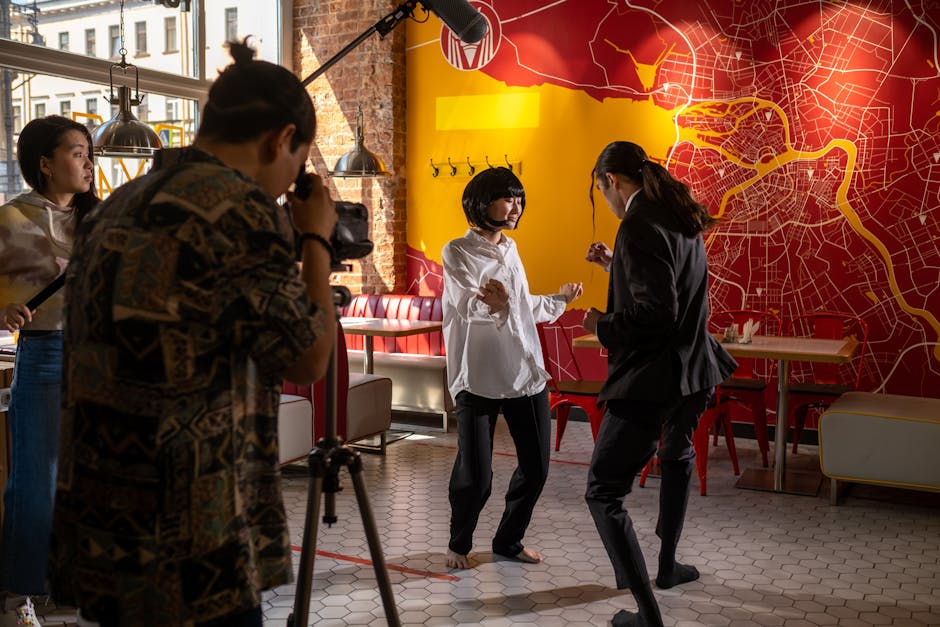
This creative freedom extends beyond blockbusters. There’s growing adoption across XR broadcast studios, commercial shoots, and immersive live events. Even influencers are creating content on XR stages.
Hollywood’s Reluctant Future
LED volumes are becoming industry standard.
 Photo by
 Major productions from Thor: Love and Thunder to House of the Dragon now routinely incorporate the technology. The global market for LED stages remains strong and is expanding well beyond big-budget Hollywood, with growing use in regions like Belfast and beyond.
Third-party rental facilities are lowering barriers for smaller productions. NantStudios’ El Segundo campus has been reconfigured into LED volumes. Trilith Studios in Atlanta hosts productions including a new Superman film.
Analysts predict LED stages will grow exponentially as panel quality improves and workflows standardize. Film schools have added LED volume courses to cinematography programs, preparing the next generation for a different kind of filmmaking.
LED volume technology has moved from experimental novelty to industry standard. The creative control and cost efficiencies it offers are simply too compelling to ignore. Hollywood’s adoption may be gradual, shaped by budgets and learning curves, but the direction is clear. The future of filmmaking isn’t green. It’s LED, and for anyone paying attention, it’s already here.