
Picture this: You’re wearing a Lakers jersey while checking fantasy football scores, streaming a Premier League match on your tablet. Your friend walks in, spots the conflicting allegiances, and just nods. This is the hybrid fan experience, and it’s becoming the norm.
Traditional sports fandom demanded unwavering loyalty to a single team, passed down through generations like a family heirloom. Today’s fans are rewriting those rules. They follow teams across different leagues, root for individual athletes over franchises, and engage with sports in ways that seemed blasphemous a decade ago. This shift isn’t diluting passion, it’s expanding it.
The Fluid Nature of Modern Fandom
The numbers tell a compelling story. Among 18-24 year olds, 93% engage with sports on social media weekly, but their approach differs fundamentally from previous generations[1].

Gen Z fans show ‘fluid’ fandom, they’re more interested in athletes’ personal stories than team histories or competition outcomes. They connect through individual narratives rather than institutional loyalty.
This represents a seismic shift. Where Baby Boomers bled team colors for life, younger fans construct portfolios of interests. They’ll follow a player across teams, support different franchises in different leagues, and switch allegiances based on compelling narratives rather than geography. Streaming numbers back this up: U.S. sports streaming audiences have grown sharply since 2021 as games migrate onto digital platforms.
What’s driving this? Younger fans don’t wait for Sunday afternoon broadcasts, they catch highlights on TikTok, engage with player content on Instagram, and build parasocial relationships with athletes who share their values. The NWSL exemplifies this trend, delivering four consecutive years of viewership growth with strong gains among women 18-34, while doubling their TikTok following[5]. These fans aren’t just watching games; they’re participating in ongoing digital conversations about sports culture.
When Predictability Kills Passion
Here’s where hybrid fandom gets interesting: it’s a rational response to structural problems in professional sports.
 Photo by
 Research shows 54.4% of fans lost interest in leagues or tournaments because outcomes became too predictable[2]. When financial inequality between teams creates dynasties, it drains excitement from competition.
The hybrid fan’s solution? Diversify. Instead of suffering through a rebuilding decade with one team, they spread attention across leagues and competitions. If the NBA playoffs feel predetermined, they pivot to following individual players in international leagues or invest energy in emerging sports with better competitive balance.
This challenges a fundamental assumption sports organizations held for decades: that fan loyalty is binary and permanent. Teams built entire business models around season ticket holders who’d support them through thick and thin. But when ‘thin’ stretches across years and competitive imbalance becomes structural, fans exercise their options. They’re not abandoning sports, they’re finding more engaging ways to experience them.
Technology as the Great Enabler
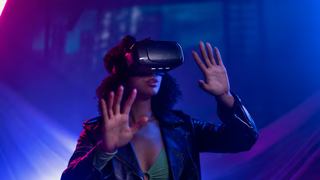
None of this works without the technological infrastructure that emerged over the past decade.
 Photo by
 Streaming platforms demolished geographic barriers that once dictated fandom. You don’t need to live in Boston to follow the Celtics or rely on occasional national broadcasts to catch your favorite team.
Teams are adapting by adopting direct-to-consumer models, expecting higher lifetime value per fan through personalized engagement. The AI Fan Behavior Prediction Market, a sector focused on understanding fan preferences, is expected to grow from $0.5 billion in 2025 to $2.7 billion by 2033[7]. This growth represents organizations’ attempts to understand and serve complex fan behaviors in an increasingly fragmented market.
But technology does more than provide access. It actively shapes fan behavior through personalization algorithms and social media dynamics. When 40% of NBA fans participate in casino integrations with tailored offers and prizes[6], we’re seeing how organizations use data to create individualized experiences that transcend traditional team loyalty. The hybrid fan isn’t just consuming content differently, they’re being served a fundamentally different product, customized to their specific interests.
The Business Model Evolution
Sports organizations face a critical choice: resist this trend or embrace it.
 Photo by
 The smart money’s on adaptation. Gen Z viewers are more likely than older demographics to attend live events, and they spend more per ticket, but they’re price sensitive and won’t tolerate poor experiences or uncompetitive products.
This creates both challenge and opportunity. Teams can’t rely on inherited loyalty or geographic monopolies. They need to earn attention in a crowded marketplace where fans have unlimited options. But those who succeed in engaging hybrid fans tap into larger, more diverse revenue streams. The key is understanding that today’s fans want flexibility and authenticity, not just traditional season-long commitments.
Success requires flexibility. Instead of demanding exclusive allegiance, organizations should create entry points for casual engagement that can deepen over time. Game-by-game streaming, content that celebrates player stories across team boundaries, and community spaces that welcome fans with diverse interests all help build connections. Rather than treating divided loyalty as betrayal, forward-thinking organizations meet fans where they are.
Some organizations are pioneering innovative approaches. St. Pauli supporters raised nearly €30 million through a stadium cooperative, demonstrating how fan ownership models create deep engagement even in an era of fluid fandom[8]. These initiatives recognize that modern fans want authentic connection and meaningful participation, not just passive consumption.
The hybrid fan isn’t a problem to solve, they’re the future of sports engagement. By following teams across leagues, prioritizing athlete narratives, and using technology to customize their experience, these fans are expanding rather than diminishing their sports passion. They represent a more engaged, more informed, and potentially more valuable audience than traditional single-team fans.
For organizations, this requires letting go of outdated loyalty expectations and embracing new engagement models. The fans who stream different leagues, follow players across teams, and construct their own sports narratives aren’t disloyal, they’re deeply engaged in ways previous generations couldn’t access. Understanding this distinction is crucial for organizations hoping to thrive in the modern sports landscape.
The question isn’t whether hybrid fandom will continue growing. It’s whether sports organizations will adapt quickly enough to capture the value it creates. Those who do will discover that flexible, personalized engagement models generate stronger connections and more sustainable revenue than rigid loyalty demands ever did. The future of sports fandom isn’t about choosing sides, it’s about celebrating the freedom to love the game in all its forms.