

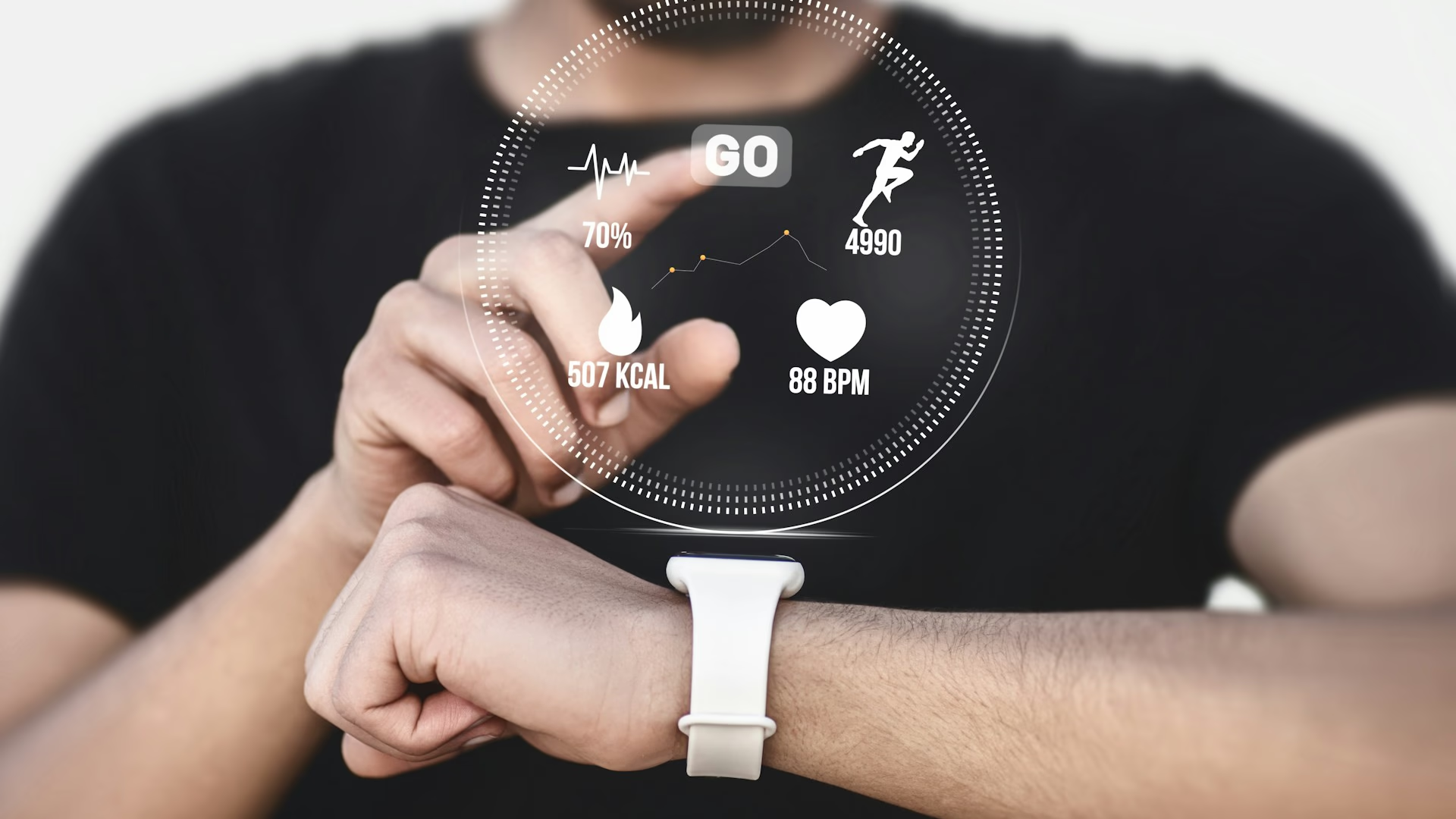
More than 70% of wearable users now apply device data to inform exercise or recovery strategies [ACSM]. In 2026, wrist-worn sensors have made Heart Rate Variability (HRV) data as routine as checking the weather. The timing matters. As wearable adoption surges across pro and amateur sports, research consistently shows that athletes who train based on HRV readings suffer significantly fewer injuries than those following fixed schedules. A 2023 investigation found that HRV-guided training improved performance and reduced injury rates compared to rigid programming [ACSM]. The practical question has shifted from “does this work?” to “how do I use it?”
What the HRV Research Actually Shows
Sports scientists have been building the case for HRV-guided training for years.
 Photo by
 Research from 2023 demonstrated that athletes who adjusted intensity based on HRV outperformed those on fixed plans, not just in endurance metrics like VO2 max, but in injury resilience [The5krunner][ACSM]. Wearable accuracy improvements accelerated the shift from lab curiosity to mainstream protocol.
Experts broadly agree on the core finding: matching training load to nervous system readiness reduces overuse injuries. Where opinions diverge is on how aggressively to modify plans. Some coaches advocate strict rest on low-HRV days; others prefer reduced volume rather than full days off. The integrated insight from both camps is that any response to suppressed HRV beats ignoring it entirely.
The strongest effects appear in high-load disciplines such as distance running, rugby, and basketball, where cumulative fatigue compounds fastest. Injury incidence in these sports clusters during periods of unregulated training load, precisely the problem HRV monitoring addresses.
What HRV Measures Beyond Heart Rate
HRV tracks millisecond-level variation between consecutive heartbeats, reflecting the balance between your sympathetic (fight-or-flight) and parasympathetic (rest-and-recover) nervous systems.
 Photo by
 Two athletes can share an identical resting heart rate of 52 bpm yet sit at opposite ends of the recovery spectrum. One is primed for a hard session; the other is silently accumulating fatigue.
HRV detects what researchers call subclinical stress: the hidden load that builds before an athlete consciously feels sore or sluggish. That early-warning window often appears hours before subjective fatigue, and it’s where injury prevention actually happens.
Modern devices from brands like WHOOP, Garmin, and Polar capture reliable morning HRV readings in under 60 seconds, making daily monitoring practical for weekend runners and elite sprinters alike.
Three Mechanisms Behind Injury Prevention
HRV-guided protocols protect athletes through three overlapping pathways:
- Load regulation. On suppressed-HRV mornings, athletes dial back intensity or volume.
 Photo by
 Since overuse injuries account for the majority of all sports injuries, this single adjustment carries outsized impact.
-
Recovery timing. Instead of guessing when a hard session has been absorbed, coaches use HRV trends to confirm genuine readiness for the next stimulus. This reduces the common error of stacking high-intensity days back-to-back.
-
Early illness detection. A sudden HRV drop, even without symptoms, flags immune stress. Resting on those flagged days can prevent minor immune dips from spiraling into full training absences.
Not every expert weights these equally. Endurance coaches tend to emphasize load regulation; team-sport practitioners lean toward recovery timing. All three mechanisms share one principle: respond to the data before the body forces you to.
Applying HRV Science Starting Today
The protocol that drives research results is surprisingly simple.
 Photo by
 It starts with consistency: same time each morning, same position, same device, for at least 14 days to establish a personal baseline. Individual HRV values vary enormously, so your neighbor’s numbers are irrelevant to your training.
Once that baseline stabilizes, a traffic-light framework works well:
- Green (HRV at or above baseline): train as planned
- Amber (moderately below baseline): reduce intensity
- Red (significantly below baseline): active recovery only
Sharing HRV trends with a coach or physiotherapist adds another layer, aligning training blocks with biological readiness rather than a calendar.
The athletes who stay healthiest across a season aren’t necessarily the most talented. They’re the ones who train when their nervous system is genuinely ready.Research confirms that adjusting load based on nervous system readiness improves both performance progression and durability [The5krunner]. With reliable wearables now widely accessible, the barrier to entry has largely disappeared. Two weeks of morning readings, a simple green-amber-red framework, and honest communication with a coach represent one of the highest-return investments any athlete can make in long-term health.


