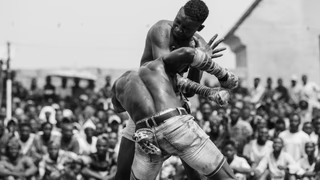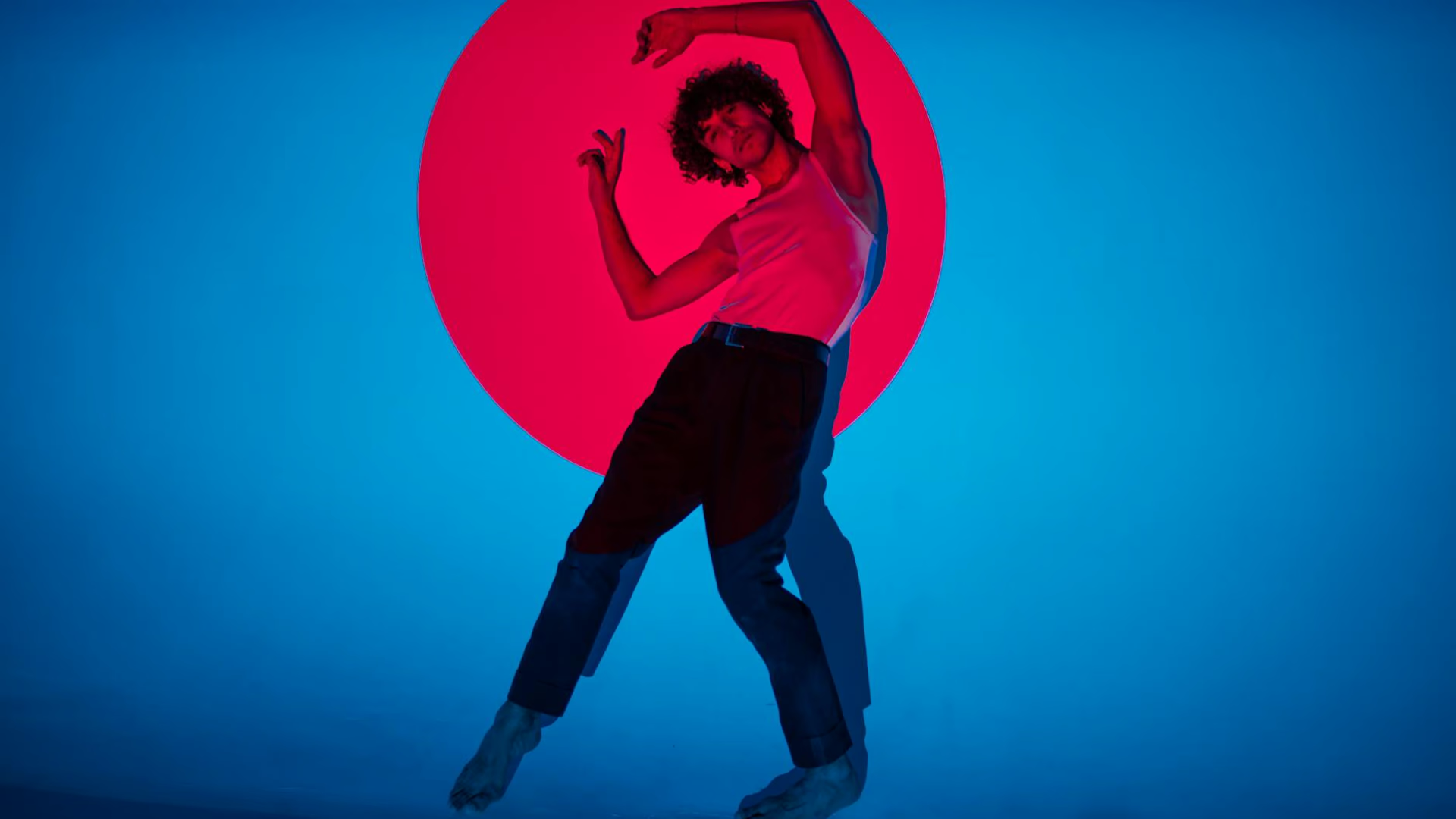

There is a gap between two hands, and it is the most alive thing in the room.
Stand in front of Matisse’s The Dance long enough and you stop seeing dancers. You start seeing the space between their fingers - that small, impossible distance on the left side of the canvas where two figures stretch toward each other and almost, almost close the circle. Their bodies lean backward with the force of their own spinning. The red of their skin is not any red found in nature. It is the red of something burning from the inside, heat made solid, urgency given form. Beneath their feet, the green earth presses back. Above them, blue sky or oblivion - Matisse will not tell you which. And the circle, that ancient ring of five bodies moving together, remains broken. Has always been broken. Will spin forever in its beautiful, unfinished state.
Matisse painted this in 1910, stripping everything away - no faces you can read, no setting you can name, no clothing to tell you who these people are or where they come from. What remains is pure motion and the evidence of effort. You can feel the burn in their calves. You can feel gravity pulling against momentum, the body choosing, again and again, to stay inside the movement rather than fall away from it.
Two hands reach. The fingers do not touch. The dance does not stop.
You know this gap. Not from museums, but from a kitchen at two in the morning, from a highway with the windows down, from a conversation that went so deep you surfaced blinking and the night had turned to early light. You know the moment the circle forms - sudden, unplanned, the body understanding before the mind catches up. And you know what comes next. The song ends. Someone checks the time. The spell cracks open and you step back into the ordinary texture of days, already half-mourning what you just had.
We have been taught to want the version of happiness that looks like arrival - the moment after all the reaching is done, the hands finally clasped, the circle finally closed. But Matisse will not give you that. His dancers are mid-motion, always mid-motion, faces showing neither joy nor grief but something closer to absorption - the look of a person who has stopped watching themselves and simply entered the act.
The genius of the painting is that the circle is already breaking, and the dancers keep dancing anyway.This is the thing we keep losing and keep finding and keep losing again. Not happiness, exactly. The willingness to reach across the gap knowing the fingers may slip, to lean your full weight into something temporary, to stay in the center when the edge feels safer. The hands in the painting never touch. That has never once stopped them from reaching.