

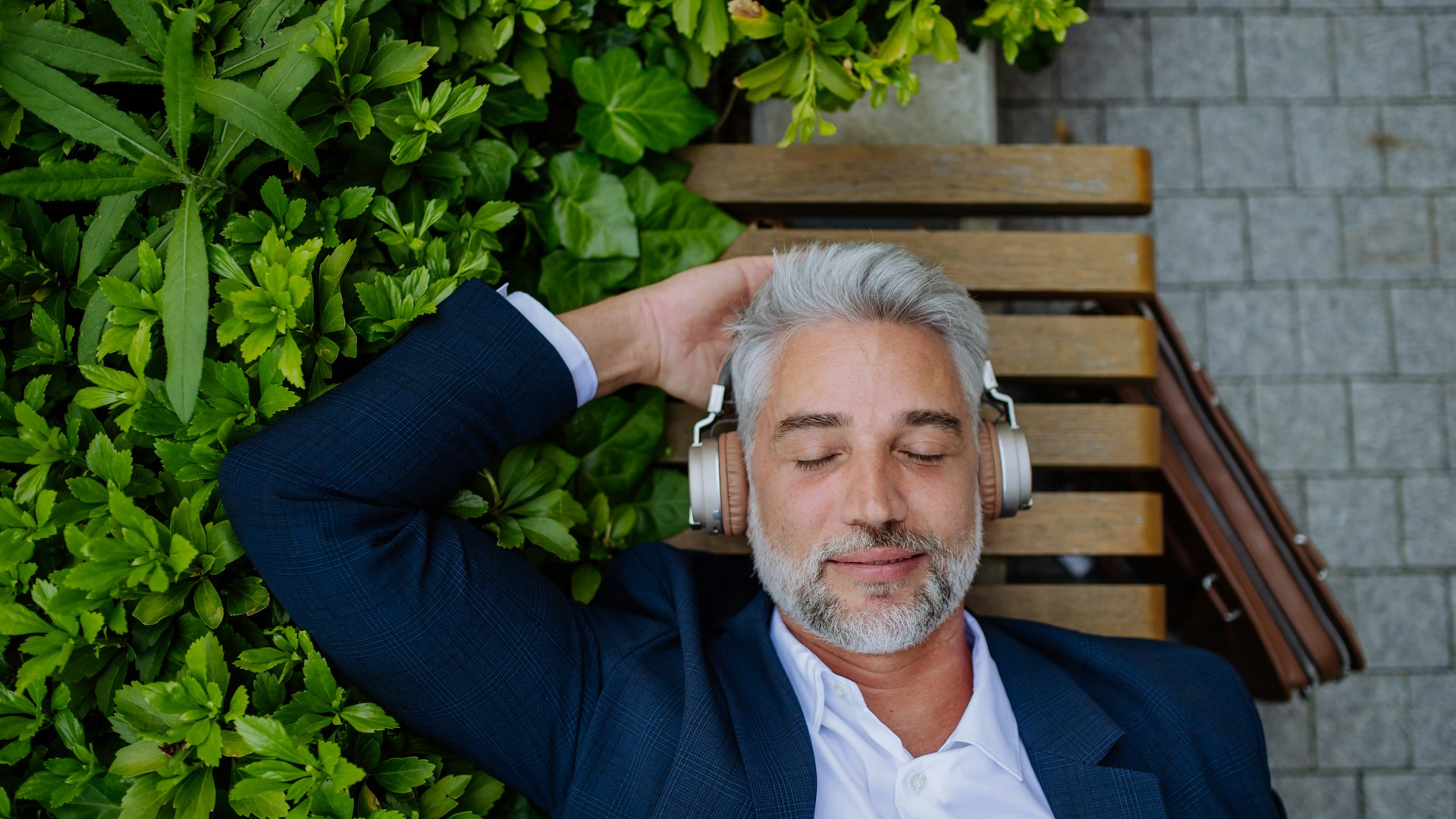
One in three American adults sleeps fewer than seven hours a night. Blackout curtains, white noise machines, and melatonin gummies haven’t moved the needle for millions of them. That gap helps explain why the sleep technology market is on track to surpass $100 billion by 2030. The latest wave of products has raised the stakes. In 2025, next-generation AI-powered sleep headphones with real-time biofeedback and adaptive soundscapes began hitting shelves. Devices like the Soundcore Sleep A30 position themselves as the first dedicated sleep headphones with intelligent audio adjustment [Experiment.com]. The marketing promises are bold: deeper REM cycles, faster sleep onset, mornings that actually feel restful. The evidence is more nuanced than any product page will tell you. Here’s what we know, what remains uncertain, and who may genuinely benefit.
Why Sleep Tech Is Booming Right Now
The surge in sleep technology isn’t driven by clever marketing alone.
 Photo by
 It’s a response to a measurable public health gap. CDC data consistently shows roughly 35% of U.S. adults fall short of recommended sleep duration, with downstream effects on cardiovascular health, cognitive performance, and mental well-being.
Brands recognized the opportunity early. Bose Sleepbuds, Kokoon, and Ozlo carved out a niche by repositioning audio hardware as dedicated wellness tools. By 2024, the Soundcore Sleep A20 and Ozlo Sleepbuds had launched as purpose-built sleep earbuds with effective noise-blocking capabilities [Experiment.com]. The category has only accelerated since.
What makes 2025 different is the integration of adaptive AI. Rather than playing a static soundscape all night, newer devices claim to read biometric signals including heart rate variability, movement, and breathing patterns, then adjust audio in real time. That’s a meaningful leap from earlier generations, at least in theory. Whether the science supports the hype requires a closer look at what audio actually does to a sleeping brain.
The Science Linking Audio to Sleep
Three audio approaches dominate the smart headphone space, each with a different evidence base:
- Pink noise synchronizes brain wave activity during slow-wave sleep, the most physically restorative stage.
 Photo by
 A 2017 study published in 『Frontiers in Human Neuroscience』 found pink noise increased slow-wave activity in older adults, with participants showing improvements in next-day memory recall.
-
Binaural beats deliver slightly different frequencies to each ear, nudging the brain toward delta or theta wave states associated with deep sleep. Research in 『Frontiers in Psychiatry』 suggests delta-frequency binaural beats may reduce sleep onset time, particularly in people with elevated anxiety. A 2023 paper in the 『Journal of Neuroscience』 also noted binaural beats may aid attention in short bursts [Experiment.com], hinting at broader neurological effects still being mapped.
-
Active noise masking addresses one of the most straightforward sleep disruptors: environmental sound. Traffic, snoring, and urban noise fragment sleep architecture and reduce REM duration, according to WHO environmental noise guidelines.
None of these mechanisms are pseudoscience. Audio entrainment has legitimate neurological grounding. That said, rigorous clinical trial data specifically comparing smart headphones to control groups for sleep quality improvement remains limited [Experiment.com]. Much of what we have comes from broader audio-sleep research, not headphone-specific trials.
What Real Users Are Experiencing
The gap between lab research and bedroom reality matters.
 Photo by
 Aggregated user data offers some useful signal.
Roughly 60 to 80% of users report positive outcomes, though results typically require 2 to 4 weeks of consistent nightly use before noticeable effects emerge [Nosleeplessnights]. That patience requirement is significant. Many people abandon devices after a few nights, well before any adaptation could occur.
Among those who stick with it, the reported benefits extend beyond sleep. Around 78 to 88% of consistent users describe moderate-to-high benefits including reduced mental fatigue and improved daytime focus [Nosleeplessnights]. These numbers are encouraging, but they come largely from self-reported surveys and brand-collected data rather than independent clinical trials.
The most consistent gains appear in two specific groups: people whose sleep is disrupted by environmental noise, and those whose pre-sleep anxiety delays sleep onset.
Users pairing smart headphones with wearable sleep trackers like the Oura Ring have shared community data showing modest increases in deep sleep duration. Individual variation is significant, though. What works well for one person may produce negligible change for another, and that’s a pattern the evidence consistently reinforces.
Honest Tradeoffs and Limitations
No sleep tool is without friction, and smart headphones carry several considerations worth weighing.
 Photo by
 Physical comfort remains the single biggest barrier. Most in-ear designs cause pressure or heat buildup for side sleepers within a couple of hours. User reviews across major retail platforms consistently cite ear discomfort as the primary reason for abandonment, not ineffectiveness but wearability.
There’s also the question of dependency. Sleep psychologists have long cautioned that any nightly aid, technological or pharmaceutical, may reduce the brain’s ability to self-regulate sleep without assistance. Smart headphones are no exception. They may work best as a transitional tool rather than a permanent fixture.
Other practical considerations include:
-
Cost: Premium sleep headphones range from $150 to $400, a meaningful investment for uncertain individual outcomes
-
Battery life: Many devices cap at 6 to 8 hours, which can fall short for full-night use
-
Side effects: Approximately 10% of users report headaches, and some experience initial dizziness from binaural beats [Nosleeplessnights]
These aren’t dealbreakers for everyone, but they’re worth factoring into any purchase decision. A structured trial period is worth considering to determine personal fit.
Who Should Consider Trying Them
Smart sleep headphones aren’t a universal solution, and that’s perfectly fine.
 Photo by
 The evidence and user data point toward specific profiles that benefit most:
- Light sleepers in noisy environments, such as apartments, urban settings, or households with a snoring partner
- People with pre-sleep anxiety who need a cognitive anchor to interrupt racing thoughts
- Shift workers whose irregular schedules make natural sleep-wake regulation difficult
If you fall into one of these categories, a structured approach may help you evaluate whether the technology suits your sleep pattern. Sleep specialists generally suggest treating audio tools as a behavioral bridge, something that supports better sleep habits rather than replacing them.
For a fair evaluation, consider pairing the device with foundational practices: consistent sleep and wake times, reduced screen exposure in the evening, and a cool bedroom environment. Starting with a 14 to 21 day trial, tracking sleep with a free app, and assessing both how you feel and what the data shows aligns with the 2 to 4 week window most users need before noticing changes [Nosleeplessnights].
Smart headphones for sleep sit at a genuinely interesting intersection of neuroscience and consumer technology. The audio-sleep connection is real. Pink noise, binaural beats, and noise masking each have evidence supporting their potential to improve sleep onset and depth. The current landscape still lacks robust, headphone-specific clinical trials, and individual variation means roughly 20 to 40% of users may not experience meaningful benefits. Before investing, it’s worth identifying your primary sleep disruptor and checking whether a device’s core feature directly addresses it. Comfort and consistency will always matter more than cutting-edge specs.