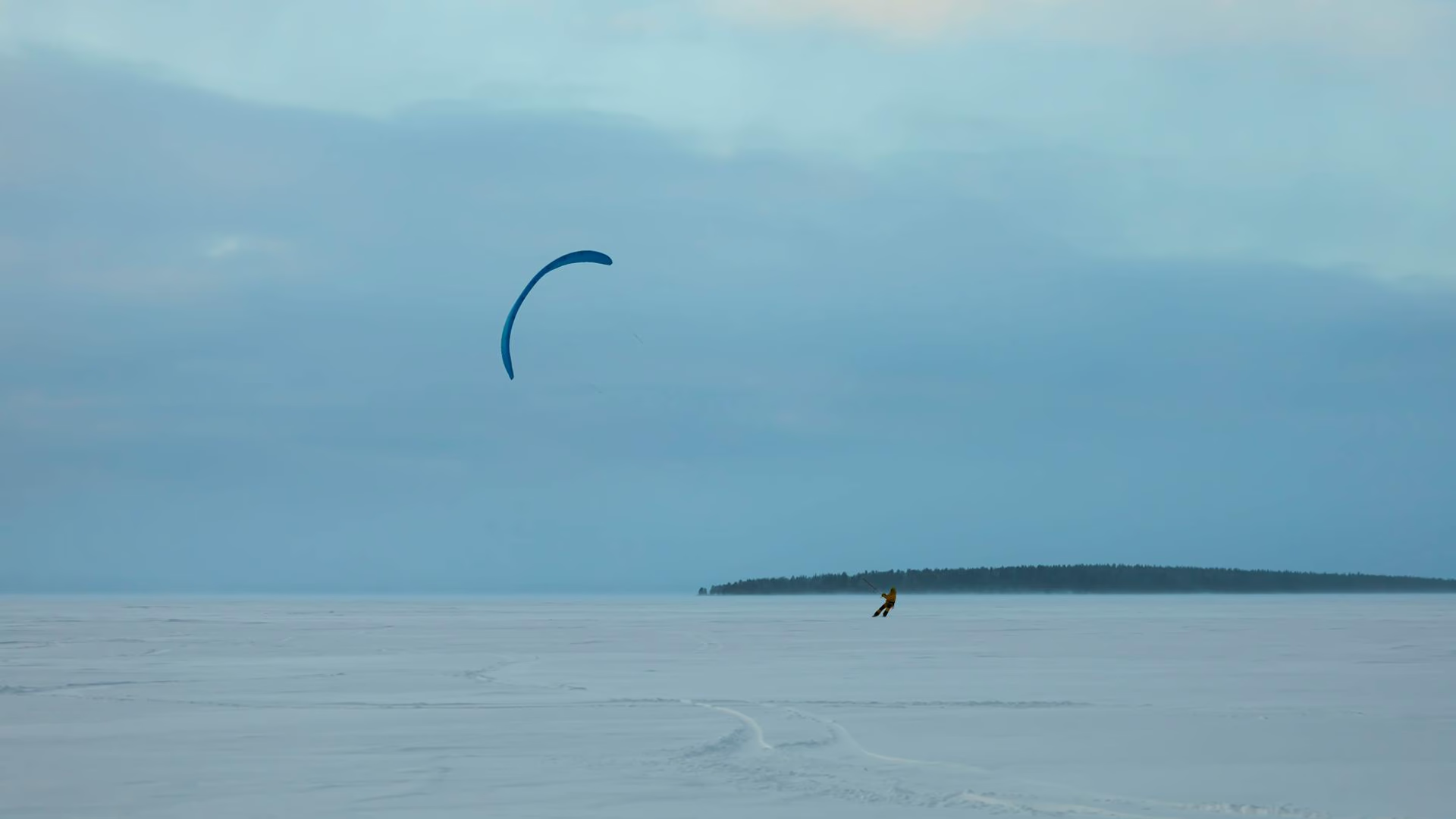

The alley is not remarkable. That is the first thing to understand. It is narrow and cold, the kind of place a city forgets it has. There is a kite somewhere above the rooftops, a green one with red trim, already tumbling from the sky in defeat. And there is a boy at the mouth of this alley, watching something he will spend the rest of his life trying not to see.
He does not move. That is the whole of it. No declaration, no confrontation, no sound at all. Just the calculation, arriving so quickly it almost disguises itself as instinct: what he might lose by stepping forward, weighed against what Hassan might lose if he doesn’t. The scales tip. The boy keeps breathing. The world continues to turn on its cold axis, indifferent to what has just been decided.
This is the moment at the center of Khaled Hosseini’s The Kite Runner. Not the kite fights, not the war, not the long return across broken geography. This one small stillness. A child in a coat he will outgrow, choosing silence, and then living inside that silence for decades. He will move to a new country. He will build a life from fresh materials. He will wake at three in the morning with the alley still there, unchanged, waiting. The kite will keep falling through his sleep. Hassan will keep running, loyal beyond all reason, unaware that the boy watching from the shadows has already turned away.
What Hosseini understands, and what makes this story feel less like fiction and more like a mirror held at an uncomfortable angle, is that most of us have stood somewhere near that alley. Not the same alley. Not the same stakes. But the same architecture: the moment when someone needed us, when we saw the cost of stepping forward, and when we let the silence stretch until the window closed.
We do not outrun the things we refuse to face. We simply carry them into new geographies.The colleague we didn’t defend. The apology composed a hundred times and never sent. The friendship we let go cold because repairing it would mean admitting we were the one who broke it. These moments do not fade with time. They stay raw beneath whatever we pile on top of them, and we find ourselves checking them privately, late at night, wondering if it is too late.
Hosteini’s answer is that it is not too late - but he is honest about what that means. It does not mean the damage disappears or the people we hurt will welcome us home. It means only that we can stop walking in the wrong direction. We can turn around.
And sometimes, turning around is a cold alley and aching knees and a boy who does not quite smile. Sometimes it is only the fraction of what we hoped for. And still, somehow, it is enough to begin.