Bile duct cancer has long been one of oncology’s most stubborn diseases. It’s typically caught late, effective options are few, and five-year survival rates sit in the single digits for many patients. That picture is shifting. A 2026 review published in Cell reports that roughly 45% of intrahepatic cholangiocarcinoma tumors carry genetic alterations that existing or emerging drugs can directly target. This finding arrives as global liver cancer rates rise and precision oncology continues to expand.
The timing matters. Intrahepatic bile duct cancer incidence has been climbing across Western countries for two decades. The gap between what genomic testing can reveal and what patients actually receive in clinic remains wide. The 45% figure reframes this disease: not as a single diagnosis, but as a cluster of molecularly distinct subtypes, many of which now have a matched therapy [News-medical].
The 45% Finding in Context
In nearly half of iCCA (intrahepatic cholangiocarcinoma, meaning bile duct cancer that originates inside the liver) cases, tumors carry targetable genetic alterations.
 Photo by
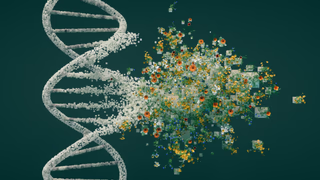
 These include FGFR2 fusions (abnormal gene joins that drive tumor growth), IDH1 mutations (errors in a metabolic enzyme), ERBB2 also known as HER2 alterations, and BRAF mutations [News-medical]. Each represents a molecular vulnerability that precision drugs are engineered to exploit.
These mutations are not evenly distributed. FGFR2 fusions and rearrangements appear in roughly 5% to 10% of iCCA patients [Binaytara]. KRAS mutations, historically difficult to drug but increasingly approachable, occur in about 30% of cholangiocarcinoma cases overall [Genfit]. That variation matters because it shapes which patients may benefit from which therapy, and it shows why blanket treatment approaches leave substantial ground uncovered.
It’s also worth noting the 45% figure applies most clearly to intrahepatic disease. Extrahepatic bile duct cancers and gallbladder cancers show different mutation landscapes, and the evidence for targetable alterations in those subtypes is less consistent.
How Precision Medicine Approaches This Cancer
Precision oncology works by sequencing a tumor’s DNA to identify the specific mutations driving its growth, then matching those mutations to drugs designed to block the resulting proteins or pathways.
 Photo by
 For bile duct cancer, this typically begins with genomic profiling, a broad scan of the tumor’s DNA, either from a tissue biopsy or, when tissue is hard to obtain, a liquid biopsy analyzing circulating tumor DNA in the bloodstream.
The clinical results are measurable. In FGFR inhibitor-naive iCCA patients who had progressed after chemotherapy, the investigational agent lirafugratinib produced a confirmed objective response rate of 46.5%, with a median duration of response of 11.8 months [Binaytara]. For patients with NRG1 fusion-positive cholangiocarcinoma, zenocutuzumab showed an overall response rate of 36.8% and a median duration of response of 12.9 months [Cancernetwork].
These numbers aren’t cures, and the Cell review authors are careful not to oversell them. But in a cancer where standard chemotherapy often yields modest, short-lived benefit, response rates in this range, paired with durable responses measured in many months, represent a meaningful shift.
What’s Available and What’s Coming
Several targeted agents are already approved or in advanced development for cholangiocarcinoma, with more in the pipeline:
-
FGFR2 inhibitors for patients with FGFR2 fusions or rearrangements
-
IDH1 inhibitors for IDH1-mutated disease
-
HER2-directed therapies for ERBB2-altered tumors
-
BRAF-targeted combinations for BRAF-mutated cases
-
Emerging agents targeting NRG1 fusions and KRAS mutations [Cancernetwork]
 Photo by
 The review’s authors frame the opportunity plainly:
“For patients with liver or bile duct cancer, the most important takeaway is that your cancer’s ‘genetic signature’ matters. If you have a bile duct cancer, ask your doctor for ‘molecular profiling.’” [News-medical]
Access depends on testing. If a mutation isn’t identified, the matched drug is effectively unavailable, regardless of whether the patient would have qualified.
Implications for Patients and Care
Several practical considerations follow from this evidence:
 Photo by
 - Genomic testing is worth requesting at diagnosis, not after first-line treatment fails. Waiting narrows the window in which results can inform decisions.
- Specialized cancer centers with dedicated hepatobiliary programs are more likely to offer routine profiling and clinical trial access.
- Response rates vary, and not every patient with a targetable mutation will respond. Resistance can also emerge over time.
The 45% figure is best read as a ceiling of current opportunity, not a guarantee. Even among patients whose tumors carry an actionable mutation, outcomes vary depending on the specific alteration, prior treatments, overall health, and how early the mutation was identified. Ongoing research into combination regimens and resistance mechanisms continues to expand what’s possible.
For patients and families navigating this diagnosis, asking specifically about molecular profiling and seeking referral to a center experienced in cholangiocarcinoma are among the most concrete steps available today.
Sources
- News-medical: New roadmap links liver cancer biology to immunotherapy and precision medicine
- Binaytara: Precision frontiers in hepatobiliary oncology: FGFR2 selectivity and immunotherapy
- Cancernetwork: FDA receives sBLA for zenocutuzumab in advanced NRG1+ cholangiocarcinoma
- Genfit investor materials: KRAS mutation prevalence in cholangiocarcinoma