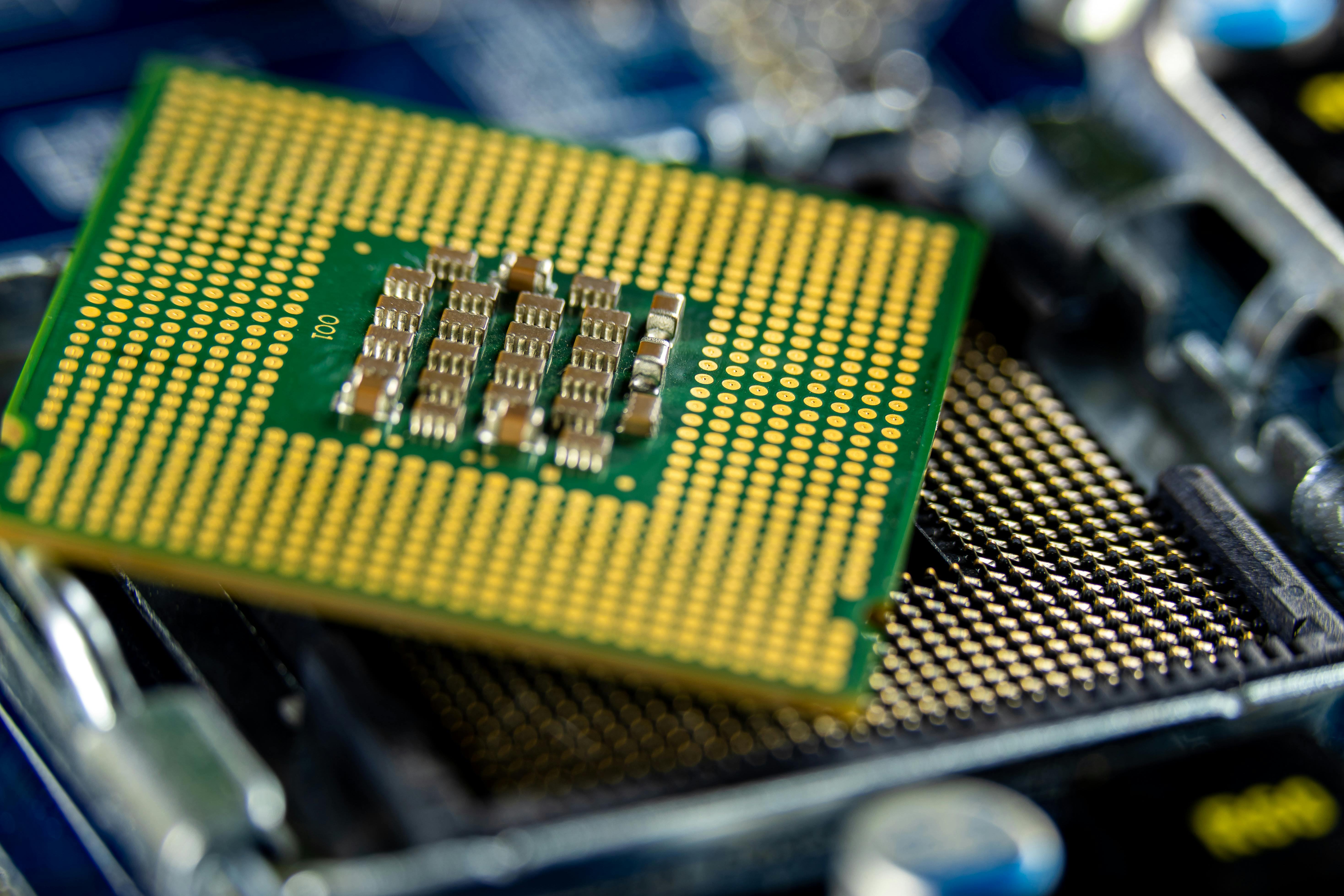
Riiven Threads
Capacitive Touchscreen
Five fields matured decades apart and met inside one pane of glass.
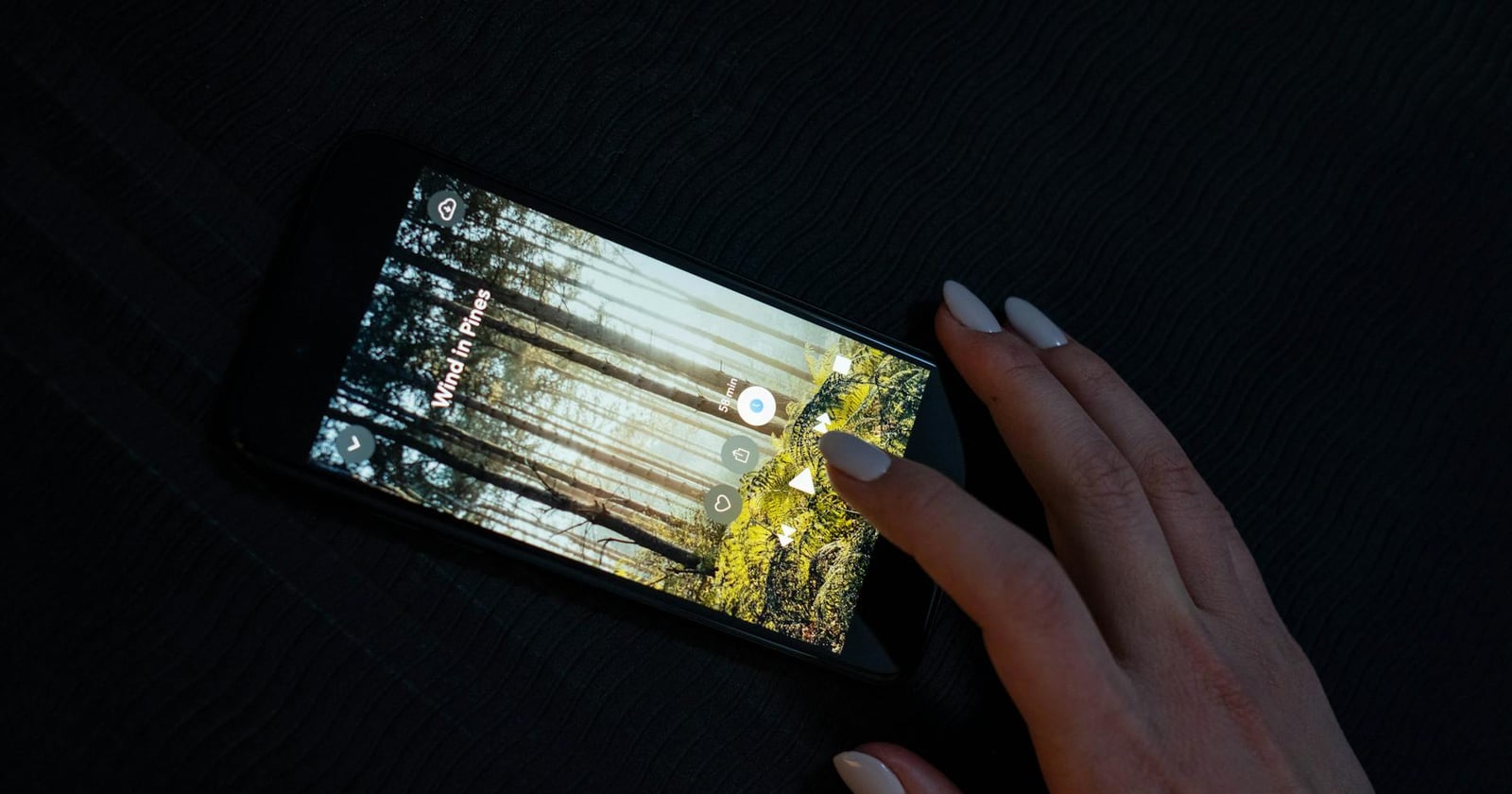
You will touch your phone about 2,600 times today. Five separate fields are doing the work beneath your fingertip. A CERN physicist controlling a particle accelerator. A German researcher in 1907 who never saw a screen. A Corning chemist whose 1962 invention was discontinued in 1971. A graduate student in too much pain to type. A zinc smelter in southern China. They were assembled into one piece of glass on January 9, 2007. Apple did not invent the touchscreen so much as notice that the pieces had finally matured at the same time.
- 68%
- Share of the world's refined indium that comes from China.
- 900tonnes/year
- Entire global indium supply, scarcer than silver, mostly consumed by displays.
When the fields matured
Each field had to produce a specific result before Capacitive Touchscreen could exist as you know it. The timeline below shows when each one arrived.
Pull any thread, and the same story unravels.
In the order the story needs them, not the order they happened. Each card carries the year its field matured.
Keystone
The electric field your finger quietly breaks
Your finger is a capacitor. Every tap completes a circuit you cannot see.
When your finger touches the glass, it bridges a microscopic electric field between two transparent grids beneath the surface. The chip below the screen measures the disturbance (a change of a few femtofarads, a quadrillionth of a unit of capacitance) and triangulates an X,Y position in milliseconds. The phone never feels the touch as pressure. It feels it as a change in voltage.
Without this field
Mutual-capacitance is the only sensing architecture that can resolve more than one finger at a time on a transparent surface. Without it, the only commercially viable alternative through 2006 was the resistive screen, a layered film that detects pressure with a stylus or fingernail and supports exactly one contact point. Pinch, two-finger rotate, three-finger swipe: none of these gestures exist in a resistive world.
Without mutual capacitance, every screen returns at most 1 contact point. Pinch-to-zoom, two-finger rotate, palm rejection: all impossible.
How we know
E.A. Johnson at Britain's Royal Radar Establishment described the first capacitive touch sensor in 1965, for air-traffic control consoles. At CERN, Frank Beck and Bent Stumpe developed a self-capacitance touchscreen in 1973 for the Super Proton Synchrotron control room, and Stumpe extended the architecture into a mutual-capacitance grid in 1977. Mutual capacitance, which measures capacitance between row and column wires rather than each wire to ground, is the only architecture that resolves more than one finger at a time. It is what every modern smartphone uses.
Source: The first capacitative touch screens at CERN (2010) · tier1
Sensing the disturbance is one problem. Deciding what the disturbance means is another entirely.
A dissertation written through carpal-tunnel pain
Pinch-to-zoom was a PhD thesis written by a student whose hands hurt too much to type.
Capacitive sensors give the chip nothing but blob coordinates. Software has to decide whether a particular pattern of blobs is one finger, two fingers pinching, three fingers swiping, or a palm to be ignored. Wayne Westerman's 1999 dissertation at the University of Delaware laid out the classification algorithms. His startup, FingerWorks, sold gesture trackpads from 2001 to 2005, when Apple acquired the company and made Westerman's work the gesture engine of the iPhone.
Without this field
Without gesture classification, multi-touch hardware is useless: the chip emits a stream of (x, y) blob coordinates that mean nothing on their own. Every application would have to write its own touch-handling code from scratch, and even basic gestures (pinch, swipe, long-press) would not be portable across apps. Westerman's classifier is the software layer that turns raw capacitive readings into a vocabulary.
iOS ships about 11 base gestures (tap, long-press, swipe, pinch, rotate, ...). Without a classifier, none of them work.
How we know
Westerman started FingerWorks because his carpal tunnel syndrome made keyboard typing unbearable; he wanted a device he could operate with light touch alone. Bill Buxton's group at the University of Toronto had demonstrated multi-touch gestures in 1985, but consumer-grade gesture classification waited until FingerWorks. Layered on top of Westerman's classifier are conventions older than computing itself: the rule that a tap target should be at least 44 points across descends directly from Paul Fitts's 1954 law of motor performance, MT = a + b·log₂(D/W + 1).
Source: Hand Tracking, Finger Identification, and Chordic Manipulation on a Multi-Touch Surface (1999) · tier1
The software could read two fingers at once. The glass still had to survive both of them.
Shelved in 1971, retrieved from a Corning warehouse
The glass on your phone was invented in 1962, shelved for forty-five years, and resurrected in months for the iPhone launch.
A capacitive touchscreen needs a cover that is thin enough for the electric field to pass through and tough enough to survive keys and coins in your pocket. Corning's chemically strengthened aluminosilicate glass was the answer, produced by submerging it in a 400°C bath of molten potassium salt so that potassium ions swap places with smaller sodium ions at the surface. The compressive layer left behind makes the glass scratch- and crack-resistant without adding weight or distorting the electric field beneath.
Without this field
Without ion-exchange aluminosilicate glass, a capacitive screen would scratch on the first day. Plastic alternatives yellow under ultraviolet light and have a different dielectric constant, distorting the electric field that capacitive sensing depends on. Every cover glass in production for capacitive touch (Gorilla Glass and its competitors) descends from the 1962 ion-exchange chemistry Corning briefly abandoned.
How we know
Donald Stookey developed Chemcor at Corning in 1962 under an internal program called Project Muscle. Sold to automakers as a windshield, it failed on cost and unfamiliar fracture patterns, and the production line shut down in 1971. In February 2006 Steve Jobs called Corning CEO Wendell Weeks asking for a damage-resistant cover glass in six months. Corning revived the formula and shipped Gorilla Glass for the January 2007 iPhone launch, a forty-five-year gap between invention and use.
Source: How Steve Jobs's iPhone Got Its Gorilla Glass (2012) · tier2
Glass thin enough to pass an electric field still needs something transparent to carry that field.
The invisible conductor discovered in 1907
Your screen is wired with an invisible metal, and the world has almost none of it.
Indium tin oxide is the only practical material that is both transparent and electrically conductive at touchscreen scales. Two ITO grids, each a film about a hundred nanometers thick, sit beneath the cover glass. Without them there is no electric field for your finger to disturb. ITO's transparency comes from a band gap wide enough to pass visible light; its conductivity from oxygen vacancies and tin doping.
Without this field
Indium tin oxide is the only material that combines optical transparency with the conductivity needed for capacitive sensing at smartphone scale. The closest alternatives, copper or silver-nanowire meshes, leave visible patterns at the densities required, and the available conducting polymers cannot match ITO's sheet resistance. No ITO means no transparent electrodes; the alternative is an opaque grid you would see through the glass.
Global refined indium supply is roughly 900 tonnes a year, scarcer than silver, and the display industry consumes more than two-thirds of it.
How we know
Karl Bädeker stumbled onto the conductivity of cadmium oxide thin films in 1907 while studying metallic deposits. Tin-doped indium oxide followed in the 1950s and was commercialized in the early 1970s as a heating layer for aircraft windshields. Indium itself is never mined directly; it is recovered as a by-product of zinc and lead refining, with global refined supply around nine hundred tonnes a year. Smartphones consume only about five percent of that, but the wider display industry (phones, monitors, televisions, laptops) takes more than two-thirds.
Source: Transparent conductors as solar energy materials: A panoramic review (2007) · tier1
ITO makes the grid possible. Where the indium actually comes from is a different, less comfortable story.
By-product of zinc smelting, critical to every screen
If a single zinc smelter in Hunan goes offline, next year's iPhone supply tightens within weeks.
Indium is not mined on its own. It is recovered, in milligram quantities per tonne of ore, as a by-product of zinc and lead refining. About sixty-eight percent of refined indium ships from China, and the next largest producers (South Korea and Japan) depend on Chinese ore. The European Union, the United States, and Japan have all classified indium as a critical raw material. The supply that lights every smartphone screen runs through a few smelters whose names you will never hear.
Without this field
When indium supply tightens, ITO film prices spike and phone manufacturers must ration display capacity. There is no fast substitute: graphene and silver-nanowire films exist in research but are not drop-in replacements at the necessary scale, transparency, and cost. The world's smartphone industry runs on the assumption that a few hundred tonnes of indium will ship from a small number of smelters every year, and there is no plan B.
About 68% of refined indium ships from China (USGS 2024). The entire smartphone industry runs through that single supply node.
How we know
Indium prices ran from roughly $200 per kilogram in 2002 to over $1,000 in 2005 and back down, driven mostly by LCD demand and intermittent smelter outages. The United States has zero primary indium production. The EU's 2023 Critical Raw Materials Act mandates recycling targets and supply diversification goals; Japan and the U.S. maintain stockpile programs. Substitutes (graphene films, silver nanowires, PEDOT:PSS conducting polymers) exist in laboratory work but cannot yet replace ITO at the scale, transparency, and price that capacitive touch requires.
Source: Mineral Commodity Summaries 2024: Indium (2024) · tier1
Watch
A visual companion to the fields above.
Takeaway
The capacitive touchscreen looks like one object. It is a forty-five-year argument among five fields that matured in isolation. CERN built its touch grid to control a particle accelerator. ITO's chemistry was discovered in 1907 by a German researcher studying metallic thin films. Aluminosilicate glass was shelved in 1971 for failing to interest carmakers. Multi-touch came out of a dissertation written through carpal-tunnel pain. The supply chain runs through zinc smelters in southern China. None of these things were built to make a phone. Apple did not invent the touchscreen. It noticed, in 2006, that five fields had spent forty-five years building toward the same object without realizing it. That kind of noticing is the actual scarce skill, not the building.
References
- The first capacitative touch screens at CERN (2010) tier1
Bent Stumpe & Christine Sutton, CERN Courier (March 2010). First-person account by Stumpe of the CERN capacitive touchscreen, covering the 1972–1973 prototype, the SPS control-room deployment in 1976, and the 1977 mutual-capacitance refinement that underlies modern smartphone touch.
- Multi-Touch Systems that I Have Known and Loved (2007) tier2
Bill Buxton, Microsoft Research (continuously maintained). Comprehensive timeline of capacitive multi-touch sensing from Bell Labs (1965) and CERN's Bent Stumpe through the University of Toronto (1985) to FingerWorks and Apple (2005-2007).
- Hand Tracking, Finger Identification, and Chordic Manipulation on a Multi-Touch Surface (1999) tier1
Wayne Westerman, PhD Dissertation, University of Delaware (1999). The algorithmic foundation of every modern multi-touch gesture system, written by FingerWorks co-founder Wayne Westerman six years before Apple's 2005 acquisition of his company.
- How Steve Jobs's iPhone Got Its Gorilla Glass (2012) tier2
Bryan Gardiner, Wired (September 2012). Reported account based on Corning archive interviews about Project Muscle (1962), its 1971 discontinuation, and the 2006 phone call from Steve Jobs that revived the formula in six weeks for the 2007 iPhone launch.
- Transparent conductors as solar energy materials: A panoramic review (2007) tier1
Claes G. Granqvist, Solar Energy Materials and Solar Cells vol. 91 (2007). Definitive academic review of indium tin oxide and competing transparent conductive oxides; covers Bädeker's 1907 thin-film discovery, the 1950s ITO synthesis, and modern device applications.
- Mineral Commodity Summaries 2024: Indium (2024) tier1
U.S. Geological Survey (2024). Annual government data on indium production, refining, prices, reserves, and trade, including China's roughly 60% share of refined supply, the United States' zero-primary-production status, and the EU and Japan critical-raw-material classifications.