Riiven Sparks
Penicillin
The first antibiotic was a contaminated petri dish a tidy scientist would have thrown away.
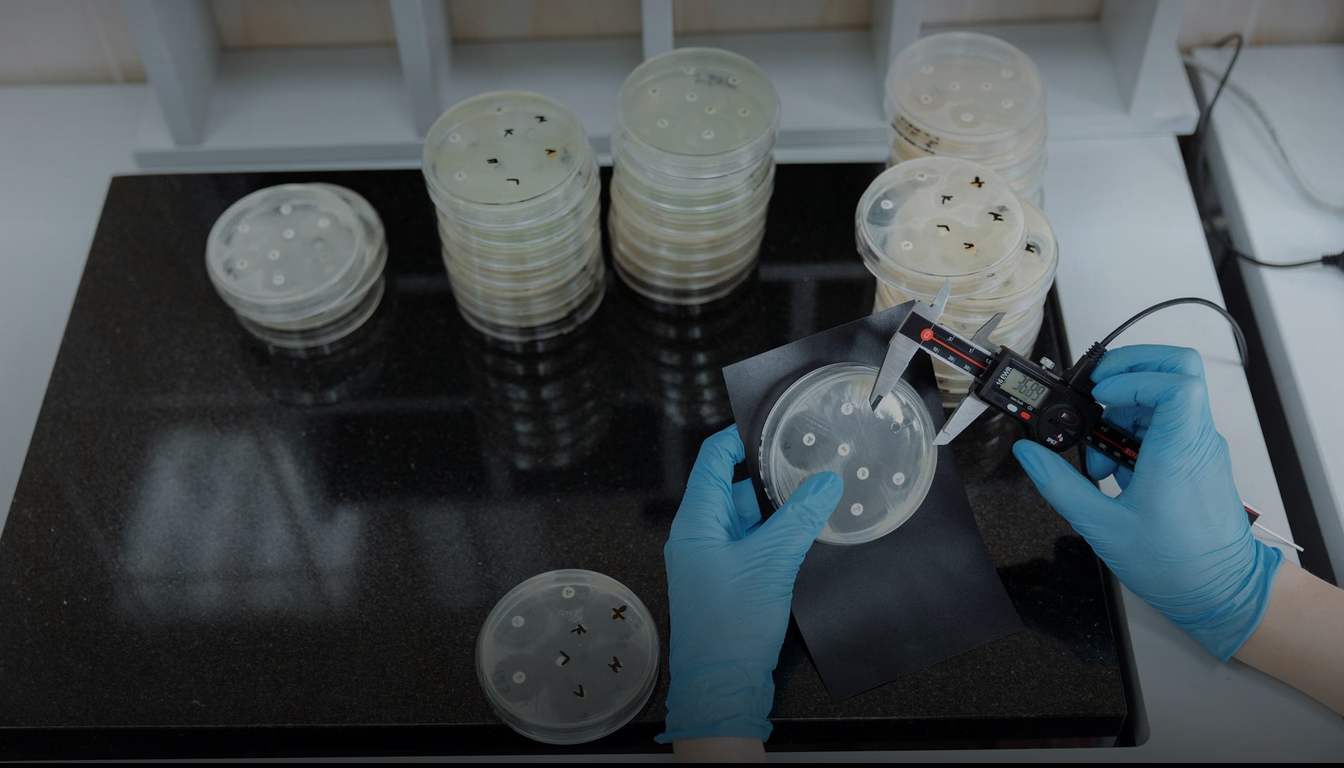
In September 1928, Alexander Fleming came back from two weeks away to find his lab a mess. One of the staphylococcus cultures he had left out was overgrown with mould. Any careful microbiologist would have rinsed it down the drain. Fleming looked closer. Around the mould, the bacteria were dead.
The pivot
Intent
Study staphylococcus colonies
Outcome
The antibiotic age
Fleming had been working on something else entirely. He was studying staphylococcus, a bacterium that lives on skin and sometimes turns deadly. The petri dishes near the open window were his weekend's progress. They became his accident instead.
What he saw was a clear ring around a blue-green spot of Penicillium mould. Inside the ring, no bacteria. Outside the ring, the colonies he expected. The mould was producing something that killed bacteria without harming the dish. He had no idea what.
He wrote it up. Almost nobody noticed. The substance was unstable, hard to extract, and Fleming himself couldn't make enough of it to treat anything. The paper came out in 1929 and slept in the journals for a decade.
It took a second accident to drag penicillin out of the archive. Howard Florey and Ernst Chain stumbled across Fleming's old paper at Oxford in 1939. By 1945 it had saved enough Allied soldiers in WWII that all three men shared the Nobel.
The nudge for the entire antibiotic age came from a scientist who didn't tidy up before he left.
Watch
The angle
Something is contaminating your real work right now. Before you throw it out: what is it actually doing?
Sources
- Fleming, A., "On the Antibacterial Action of Cultures of a Penicillium, with Special Reference to their Use in the Isolation of B. influenzae," British Journal of Experimental Pathology 10(3):226-236, 1929 (1929)
- Tan, S.Y. & Tatsumura, Y., Alexander Fleming (1881–1955): Discoverer of penicillin (2015)