

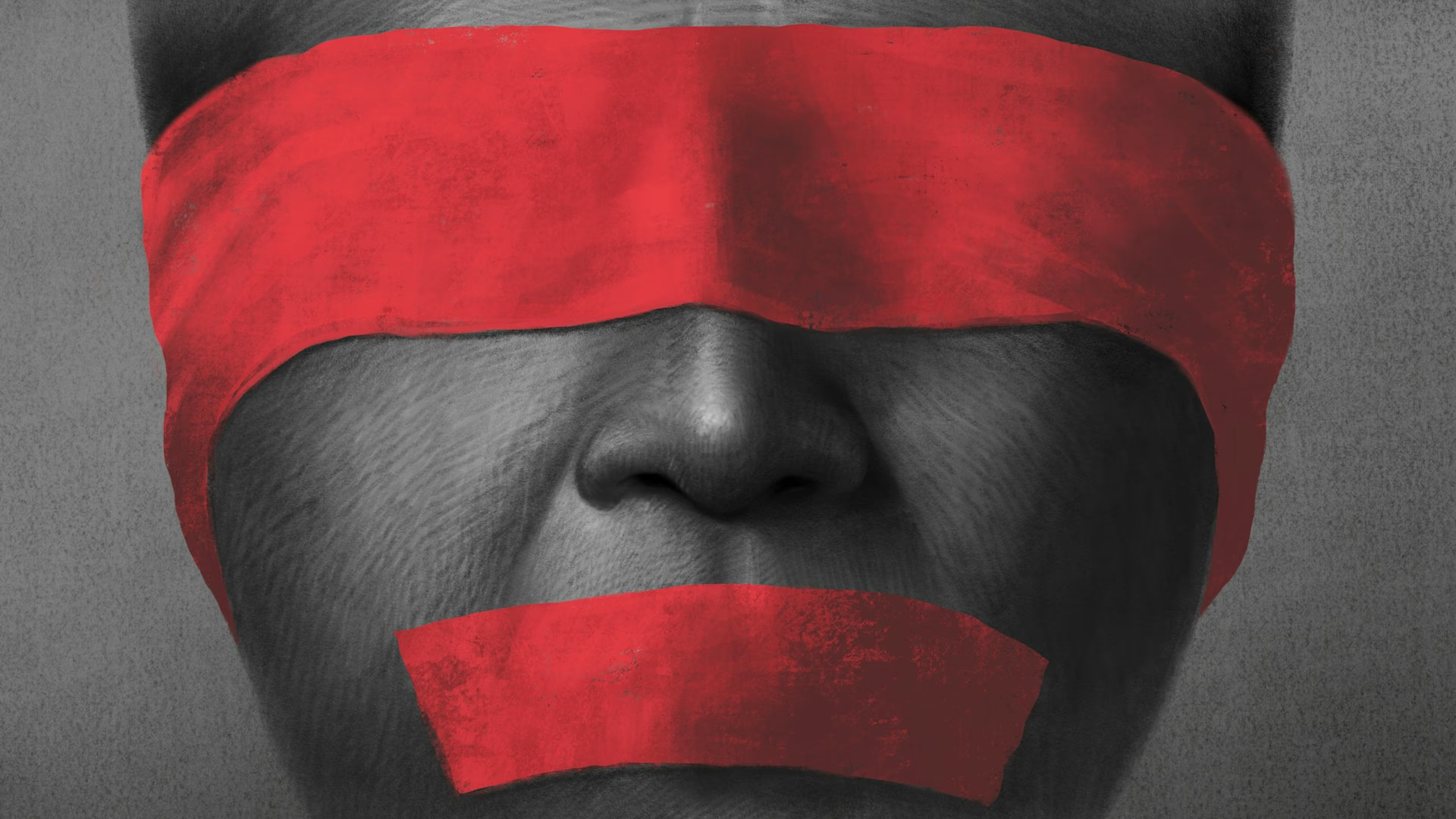
“Oppressive language does more than represent violence; it is violence; does more than represent the limits of knowledge; it limits knowledge.”
— Toni Morrison, Nobel Prize in Literature Acceptance Speech (1993)
Toni Morrison received the Nobel Prize in Literature in 1993, becoming the first Black woman to receive the honor. Her novels, including Beloved and Song of Solomon, excavated the depths of Black American experience with prose that was both lyrical and unflinching. In her Nobel acceptance speech, she centered her remarks on the power and responsibility of language itself.
Morrison spoke these words at a moment when she had reached the pinnacle of literary recognition, yet she used the platform not to celebrate her achievement but to issue a warning. She understood that language shapes reality rather than simply describing it. When words are wielded to oppress, they don’t just mirror existing violence or ignorance. They become instruments that actively harm and constrict what can be known or imagined.
This insight came from a writer who spent her career reclaiming narratives that had been silenced or distorted. Morrison knew that the stories we tell, and the words we choose, either open possibilities or foreclose them. Her declaration collapses the distance between representation and reality, reminding us that speech acts carry weight and consequence. The words we use don’t passively sit on the page or float in the air. They do something in the world.