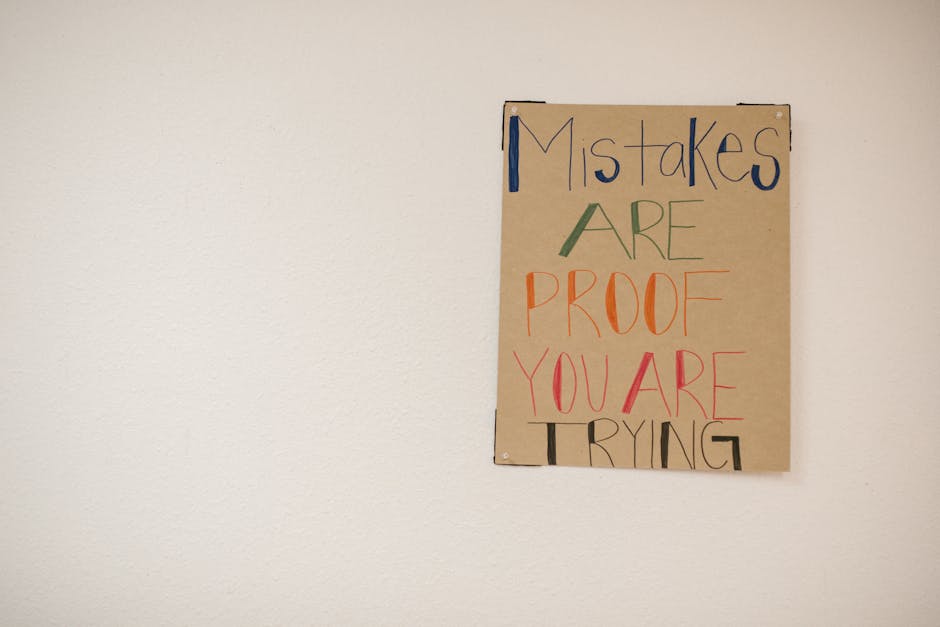

You’re stuck in traffic, late for a meeting, and your phone battery just died. In that moment, something interesting happens in your brain. Do you feel your chest tighten as catastrophic thoughts spiral? Or do you take a breath and start considering alternatives?
Here’s what most people don’t realize: that response isn’t fixed. A problem-solving mindset isn’t something you’re born with. It’s a learnable skill that transforms daily obstacles into growth opportunities. The difference between people who navigate challenges gracefully and those who feel constantly overwhelmed often comes down to a few deliberate cognitive patterns and consistent practice.
Let’s explore how to build this capacity, starting with the fundamental shift in how you perceive problems, then moving through practical techniques for breaking down challenges, overcoming mental barriers, and creating sustainable daily habits.
The Core Cognitive Shift
Picture two people facing the same situation: a project deadline moved up by a week.

One immediately thinks, “This is impossible. I’m going to fail.” The other thinks, “Okay, this is tight. What can I actually control here?”
The difference isn’t intelligence or experience. It’s orientation. Effective problem-solvers view challenges as neutral events requiring analysis, not threats requiring defense. This fundamentally changes both their emotional and cognitive response.
The first practical step is replacing reactive thinking with proactive assessment. Before you respond emotionally to any problem, pause and ask yourself: “What can I control in this situation?” This simple question redirects your brain from threat-detection mode to solution-finding mode.
Research supports this approach. Leaders with a growth mindset view uncertainty as an opportunity to learn and innovate rather than something threatening [PNAS]. This isn’t just feel-good advice. It’s a cognitive strategy that opens up mental resources otherwise consumed by anxiety.
Beyond the initial pause, the language you use matters enormously. Try reframing “I can’t handle this” to “I haven’t figured this out yet.” That small word, “yet,” maintains your sense of agency and possibility. It keeps the door open for solutions rather than slamming it shut.
Finally, cultivate curiosity. When facing a challenge, ask yourself: “What’s interesting about this problem?” This question engages your analytical brain regions rather than your defensive ones. It transforms problems from enemies to puzzles.
Quick takeaway: Shifting from threat-based to opportunity-based thinking activates problem-solving brain regions and reduces emotional reactivity.
Recognizing Your Problem-Solving Patterns
Before you can improve how you solve problems, you need to understand your current default settings.
 Photo by
 Most of us fall into predictable patterns without realizing it.
Think about the last few challenges you faced. Did you avoid dealing with them, hoping they’d resolve themselves? Did you rush to the first solution that came to mind? Or did you overthink endlessly, analyzing without acting?
Each pattern has blind spots. Avoiders often miss early intervention opportunities when problems are still small and manageable. Impulsive solvers frequently overlook key constraints and end up with solutions that create new problems. Overthinkers delay action so long that options narrow or disappear entirely.
Once you identify your tendency, you can build compensating strategies. If you’re an avoider, consider setting a rule: address any new problem within 24 hours, even if just to define it clearly. If you’re impulsive, it helps to build in a mandatory constraint check before implementing solutions. If you overthink, setting decision deadlines can move you forward.
Notice your emotional triggers too. Perfectionism, fear of judgment, and need for certainty all hijack rational thinking. When you feel these emotions rising, recognize them as signals, not as accurate assessments of the situation.
Teams that sustain high performance never stop developing this kind of self-awareness. They view challenges as opportunities to grow [Gable], which requires honest assessment of current patterns. The same principle applies to individual problem-solving.
Quick takeaway: Understanding your default patterns allows you to consciously override unhelpful responses and choose better strategies.
Breaking Down Complex Challenges
Here’s where many people get stuck: they face a large, complex problem and feel paralyzed by its scope.
 Photo by
 The solution isn’t to think harder. It’s to think smaller.
Use the chunking technique: divide any large problem into three to five distinct sub-problems that can be tackled independently. Cognitive load research shows our working memory handles this range optimally for complex reasoning. More than five chunks overwhelms. Fewer than three probably means you haven’t broken things down enough.
For each chunk, define specific, measurable outcomes. “Improve the situation” is too vague to act on. “Reduce response time by 20%” or “identify three alternative vendors by Friday” gives you clear targets.
Next, identify dependencies between components. Some pieces need to happen before others. Mapping this out prevents wasted effort on steps that can’t succeed until prerequisites are complete.
Here’s a counterintuitive tip: start with the smallest winnable component, not the most important one. Early wins build momentum and often reveal information that helps with larger pieces. Physical exercise positively predicts cognitive flexibility [Frontiers], and similarly, small problem-solving wins build mental flexibility for bigger challenges.
This systematic approach transforms paralyzing complexity into a series of achievable steps with clear next actions.
Quick takeaway: Decomposition transforms overwhelming problems into manageable sequences of specific, actionable steps.
Overcoming Mental Barriers
Sometimes the biggest obstacles aren’t in the problem itself.
 Photo by
 They’re in your head. Common cognitive distortions actively block creative problem-solving, and recognizing them is half the battle.
Perfectionism is particularly sneaky. It disguises itself as high standards, but it actually prevents progress. If you won’t act until you have the perfect solution, you’ll rarely act at all. Instead, consider setting “good enough” standards that allow iteration. Your first solution doesn’t need to be final. It just needs to move things forward.
All-or-nothing thinking is another trap. Most solutions exist on a continuum, not as success or failure binaries. A solution that addresses 70% of a problem isn’t a failure. It’s significant progress that creates space for further improvement.
Catastrophizing, assuming the worst possible outcome, distorts your perception of risk and reward. Counter it by asking two questions: “What’s the actual worst case?” and “How would I handle that?” Usually, the realistic worst case is manageable, and you have more resources to handle it than you initially imagined.
Teams with high psychological safety, where people feel comfortable taking risks, exceeded their targets significantly [Gable]. The same principle applies individually. When you reduce internal judgment and fear, you free up mental resources for creative thinking.
Quick takeaway: Identifying and challenging cognitive distortions removes invisible obstacles that prevent you from seeing viable solutions.
Building Your Daily Practice
Problem-solving skills, like any other skills, strengthen through deliberate practice.
 Photo by
 The key is consistency with small challenges rather than occasional heroic efforts with big ones.
Start each day by identifying one minor problem to solve consciously. It might be optimizing your morning routine, finding a better way to organize your workspace, or resolving a small interpersonal friction. Apply systematic thinking to these mundane challenges. The goal isn’t the solution itself. It’s building neural pathways.
Even brief interventions make a difference. Research shows that short, consistent practice sessions enhance cognitive performance over time [Frontiers]. The same principle applies to problem-solving practice.
End each day with a five-minute reflection. Ask yourself: What problem did I face today? What approach did I use? What would I do differently? This structured reflection increases skill transfer to new situations far more than experience alone.
Gradually increase difficulty. Once you’re comfortable with small daily problems, tackle slightly more complex challenges weekly. This progressive approach builds confidence through mastery rather than overwhelming you with premature difficulty.
Practice across different domains: personal, professional, creative, relational. This develops flexible thinking that transfers across contexts. A problem-solving approach that works for scheduling conflicts might, with adaptation, work for creative blocks or relationship tensions.
Quick takeaway: Consistent practice with small problems, combined with reflection, builds problem-solving capacity more effectively than waiting for crises.
A problem-solving mindset emerges from several interconnected skills: reframing challenges as opportunities, understanding your default patterns, systematically breaking down complexity, overcoming mental barriers, and practicing consistently.
None of this requires special talent. It requires attention and repetition. The cognitive shifts become automatic over time, the systematic approaches become second nature, and the mental barriers lose their power as you learn to recognize them.
Here’s your starting point: choose one small daily problem this week to solve consciously. Apply these techniques deliberately. Reflect on your process each evening. Notice what works and what doesn’t.
The problems you’ll face tomorrow haven’t changed. But how you meet them can transform everything about your experience and outcomes. Start small, stay consistent, and watch your capacity grow.


